News
AI Overview citations unfaded: who gets the 3 cards you see
AI Overview citations on desktop now show as three unfaded cards, and Google is testing sticky ones. We checked 863 overviews to see who gets those three.

· Updated · 8 min read
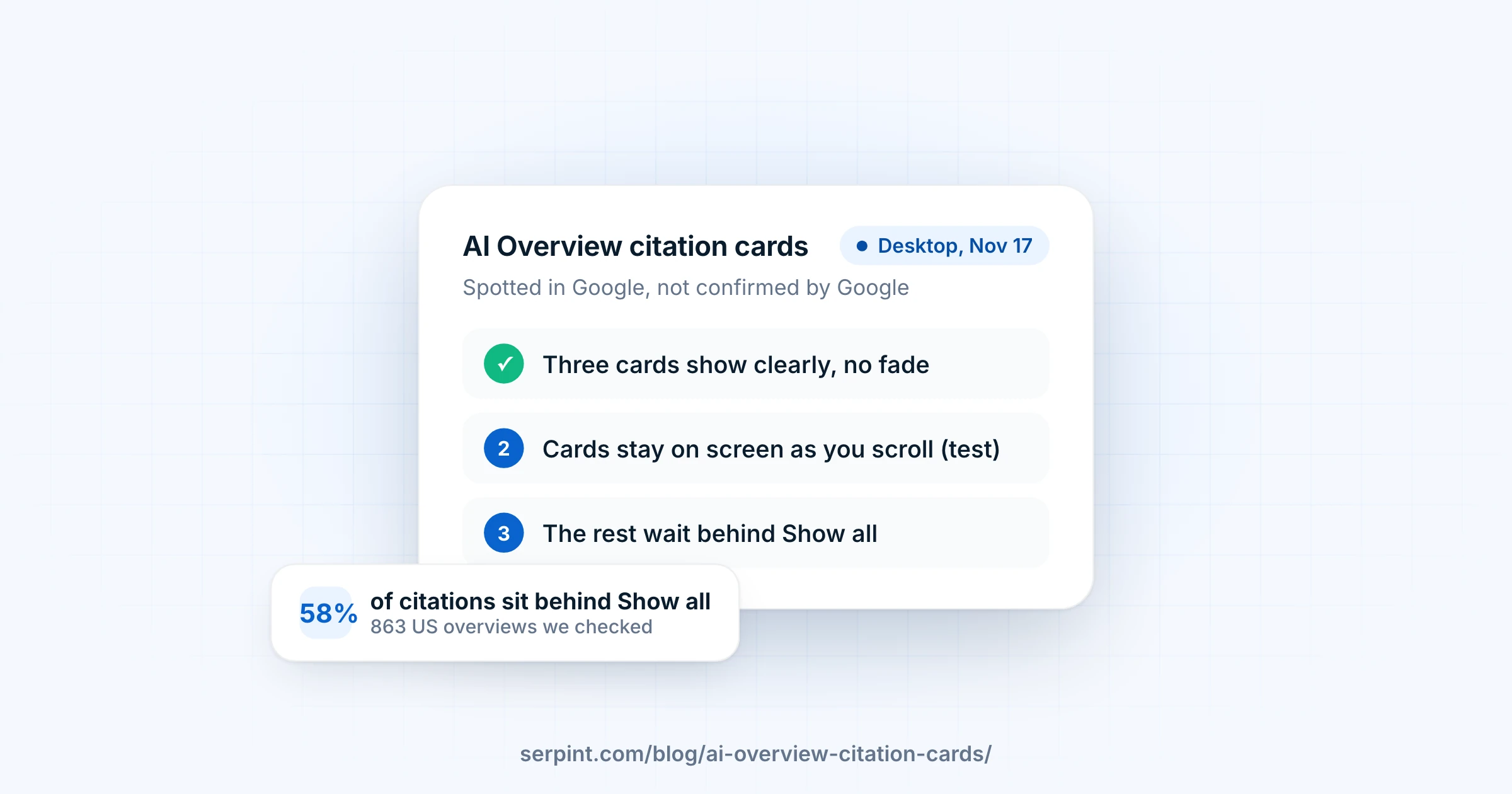
AI Overview citations on desktop now show as three clear cards instead of one card and a fade, Search Engine Roundtable reported on November 17, 2026. Google hasn’t confirmed it. In our data, 72% of overviews cite more than three sources, so most citations still sit out of sight.
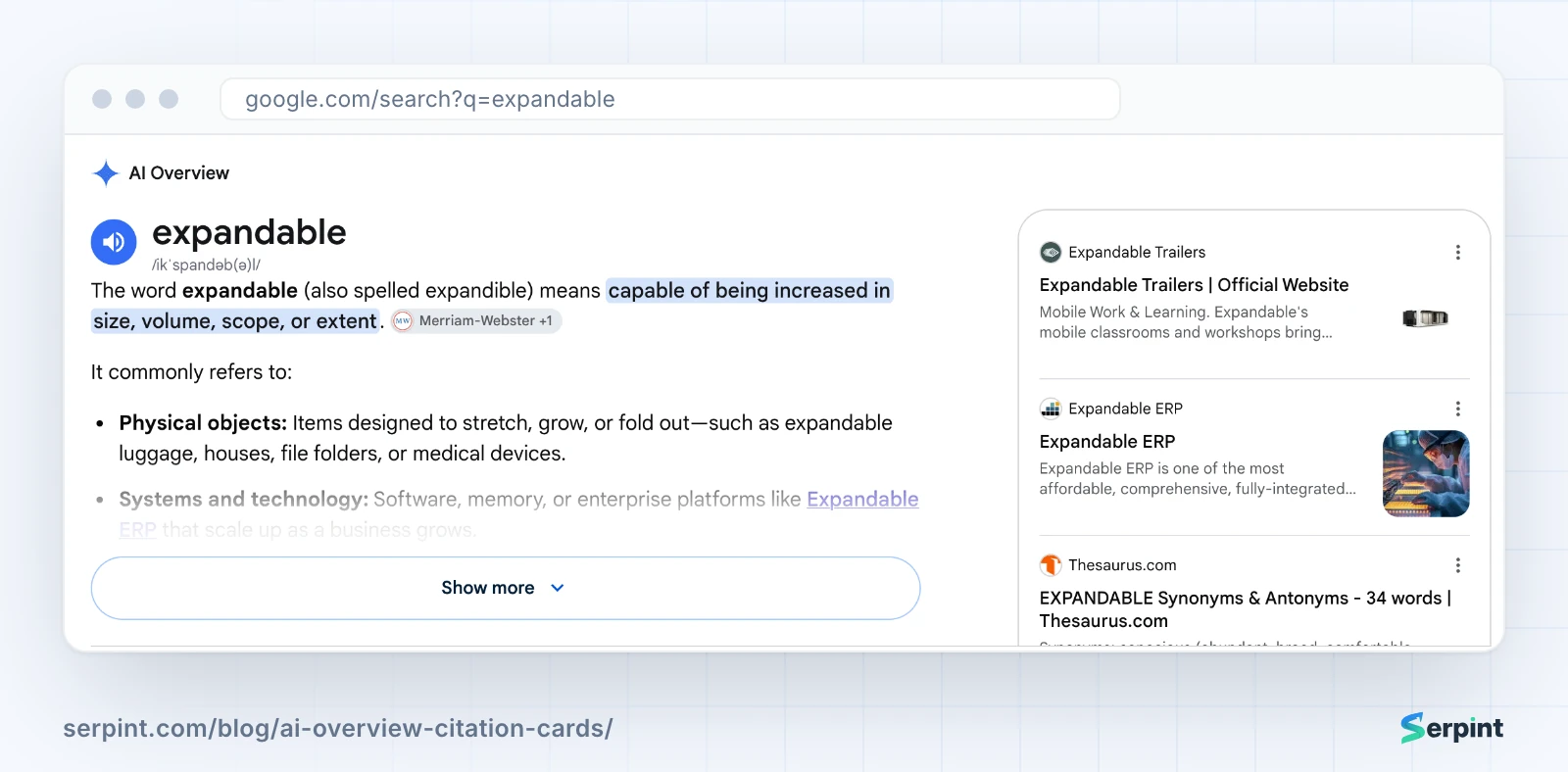
Three unfaded cards, November 2026. CC: Barry Schwartz
✅ My advice Check which of your keywords cite you, then whether you’re in the first three cards. A citation behind Show all is barely a citation. Don’t redesign pages for a layout Google has changed four times since September.
The bigger question is who gets those three cards, and our AI Overview study can answer it. First, what changed.
What changed in AI Overview citations on desktop?
Desktop AI Overviews now show their first three citation cards in full, with no fade. Before, the first card was clear and the ones below it faded out. Brodie Clark spotted the change; the rest of the sources sit behind a Show all button.
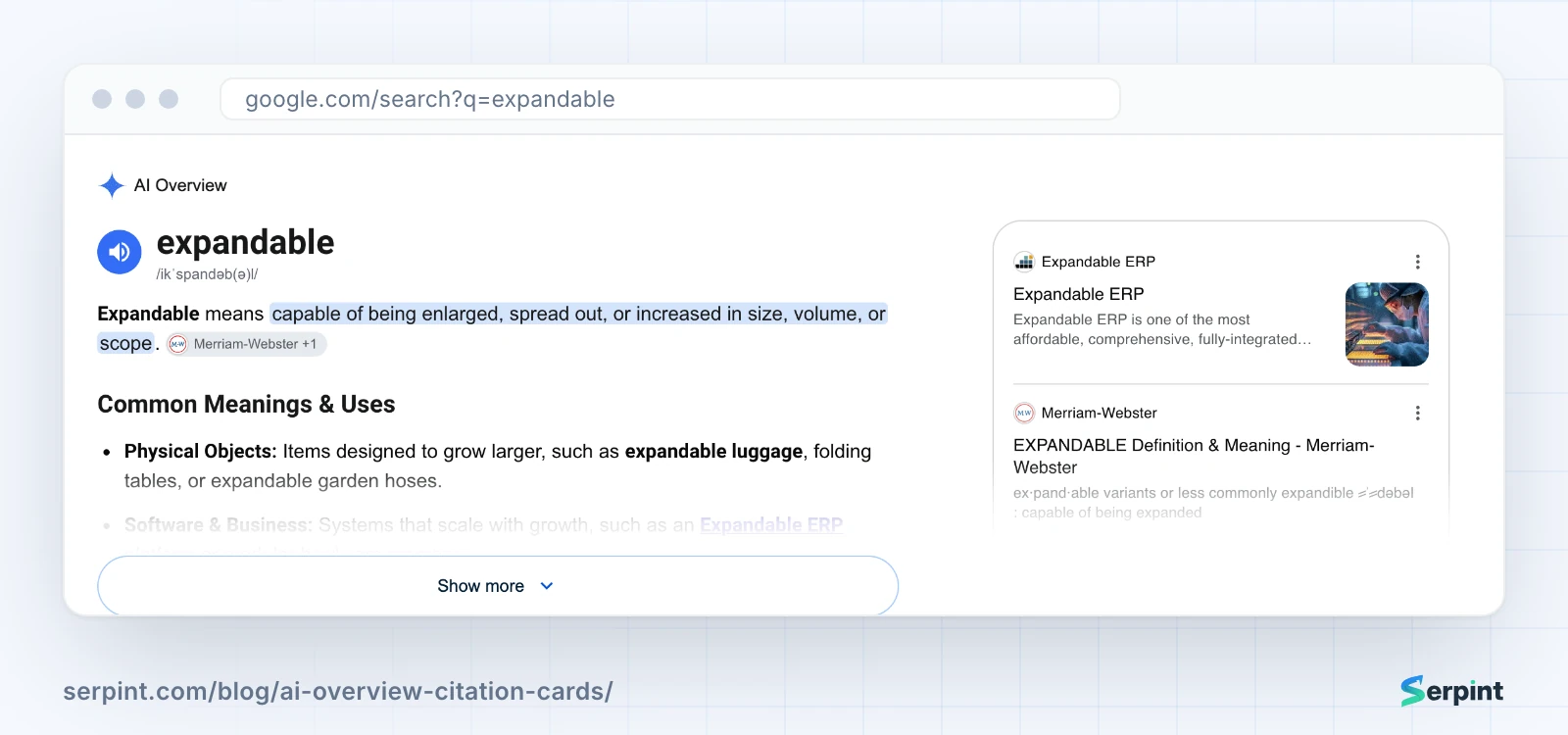
The same search before: the second card fades out. CC: Barry Schwartz
Search Engine Watch saw a second test the same day: sticky citations. The cards stay on screen and move with you as you scroll through a long overview. A new line also separates the overview from the results below it.
Google hasn’t confirmed either change. Its last word on links was an October 15 post promising more inline links, higher in answers. It says nothing about the cards.
This isn’t the first time the cards have moved this autumn.
Why does Google keep changing the citation cards?
Google keeps changing the citation cards because it’s still testing where sources belong. On September 29, cards dropped below the answer. On October 29, some overviews had no cards at all. On November 11, the source icons moved to the bottom.
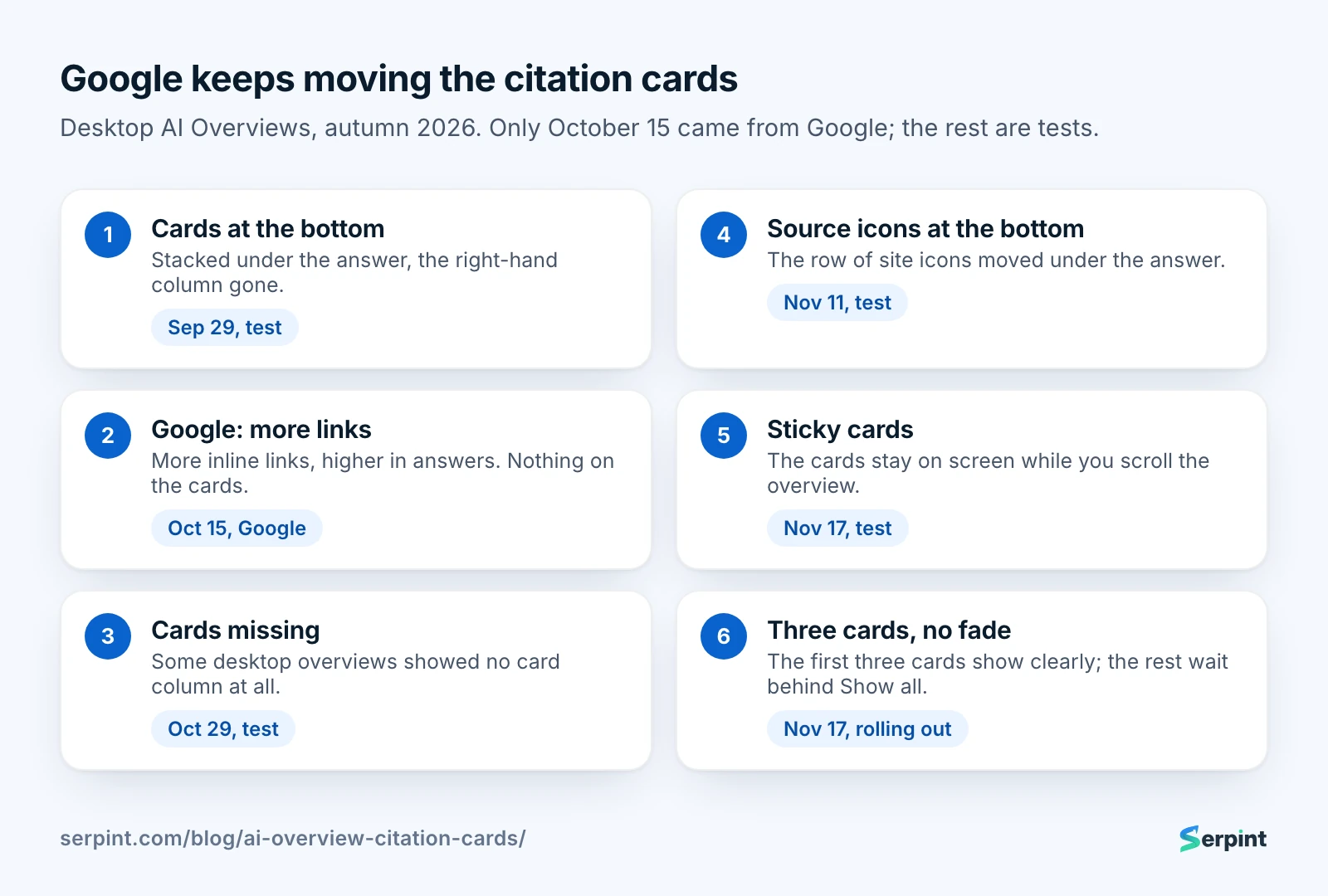
From Search Engine Roundtable’s and Search Engine Watch’s reports, and Google’s post of October 15.
I read the unfaded cards as the friendliest of these layouts for sites. The bottom stack and the missing cards hid sources; this one shows three without a click. Whether it lasts is another matter.
Three visible cards only matter if an overview cites more than three sources, so we counted.
How many sources does an AI Overview cite?
A desktop AI Overview cites seven sources at the median, and 72% cite more than three. That leaves 58% of all citations behind Show all. We counted 5,986 citations in 863 US overviews from our AI Overview study, fetched on November 16, 2026.
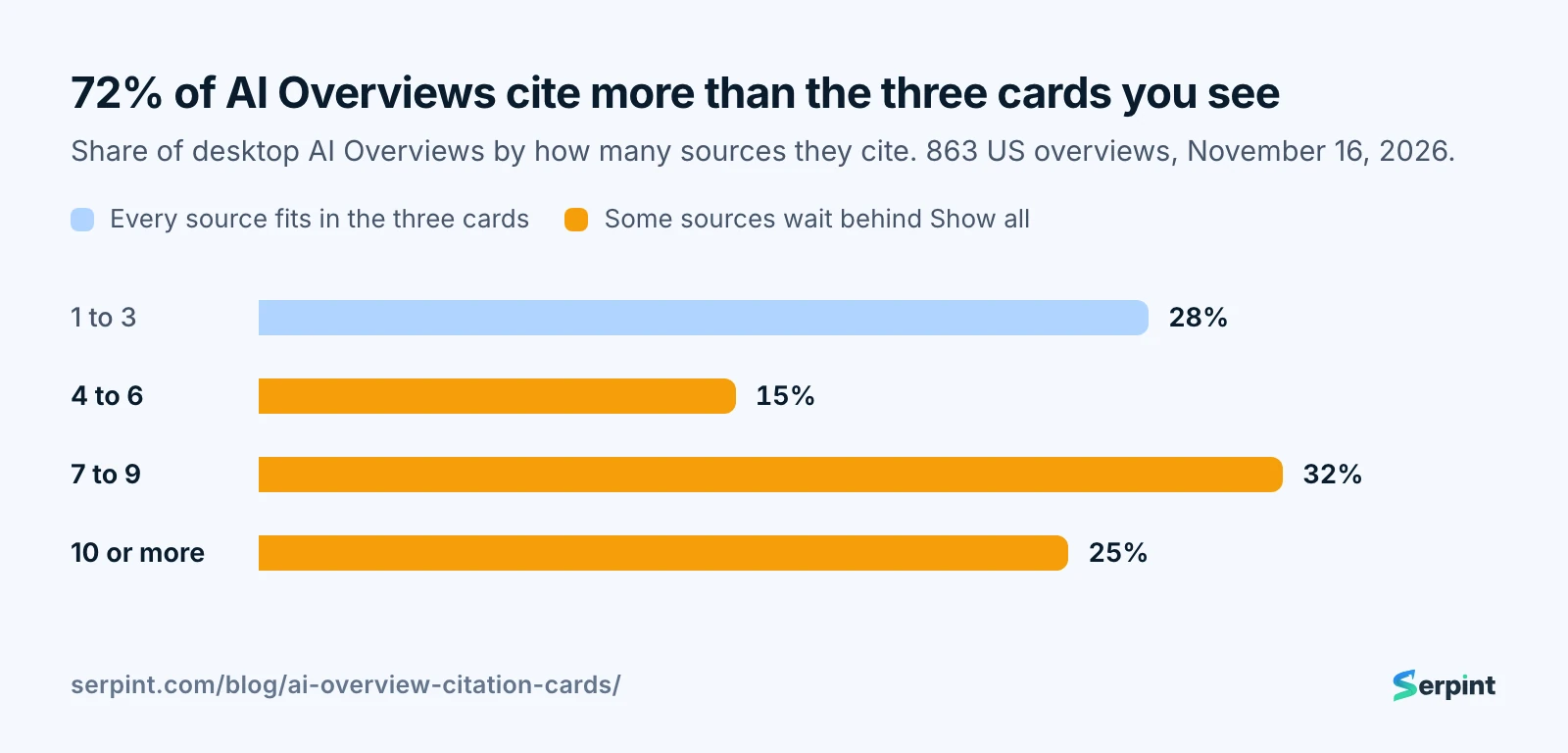
Data: Serpint’s US results pages, desktop, November 16, 2026.
Every source sits in that right-hand column. In our November 12 pages, all 2,350 citations we read were listed there. So on desktop, the cards are where an overview lists its sources, and only three are in view.
That raises the question that matters for your site: who gets the front row?
Who gets the three cards people see?
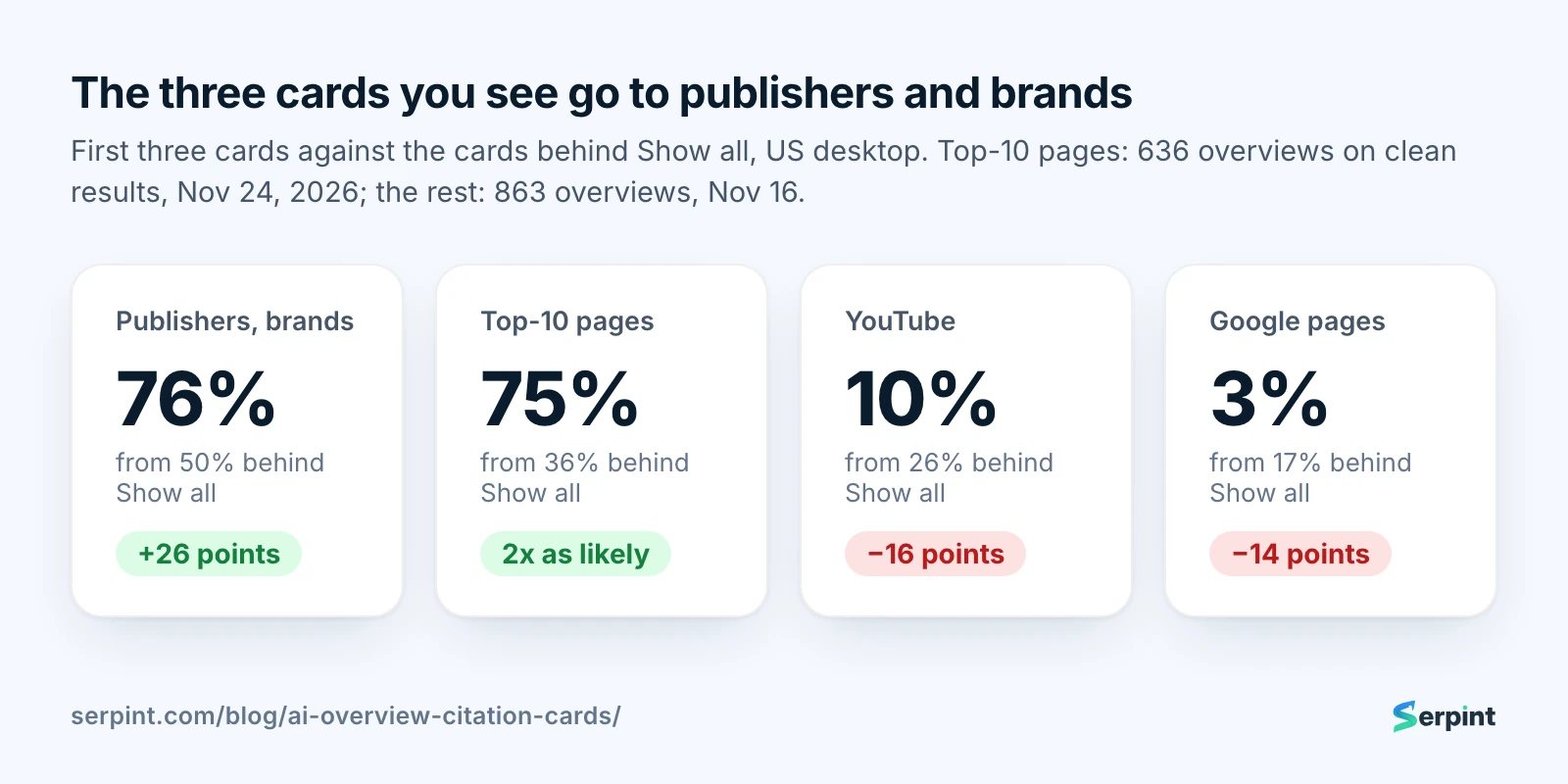
Publishers, brands and shops get most of the visible cards: 76% of first-three citations, against 50% of the cards behind Show all. YouTube and Google’s own search links mostly wait behind the button. Pages ranking in the top 10 are twice as likely to get a front-row card.
Data: Serpint’s US results pages, 863 desktop AI Overviews, November 16, 2026; top-10 pages from 636 overviews checked against clean results, November 24, 2026.
YouTube shows how much the order matters. It’s cited in 57% of overviews, more than any other site, but holds 10% of the first three cards and 26% of the rest. Google’s links to its own search pages take 17% of the hidden cards and 3% of the visible ones.
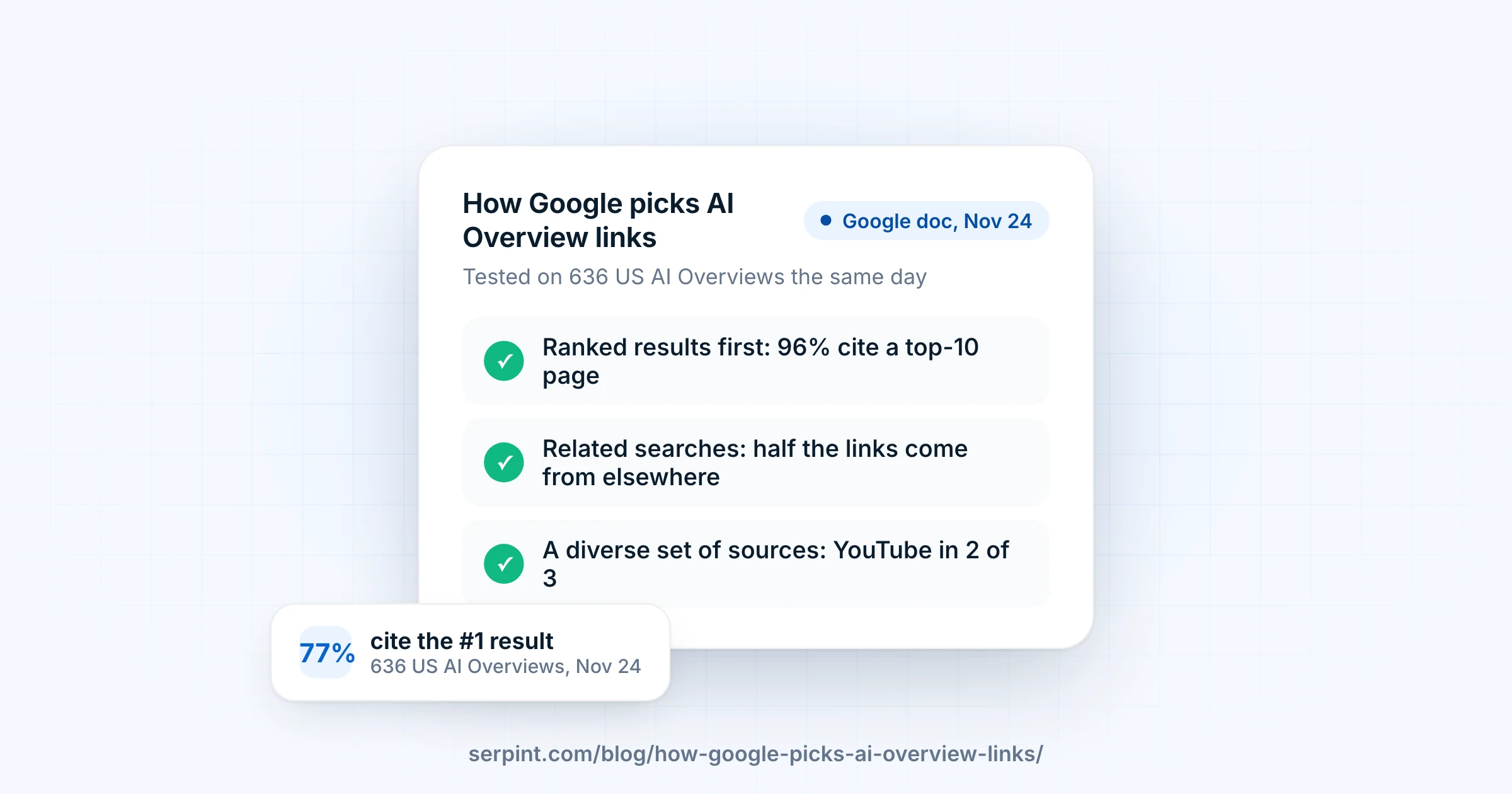
Ranking helps more than I expected. Top-10 pages are 75% of first-three citations against 36% behind Show all. The #1 result is in the first three cards of 71% of overviews, and it’s the very first card in 57%.
📌 Correction We first published 20% against 6.5%, and the #1 result in the first three in only 14% of overviews. The top 10s we compared with were poisoned: Google had served our fetches normal-looking pages with the wrong organic results. The figures above come from a check against clean results on November 24, explained in our AI Overview study.
Our November 12 pages show the same split by kind of site, so it isn’t one day’s noise. One caveat: the order is the one our results data lists. It matched the screen on the search I checked by hand.
💡 My take The front row goes to pages that rank and own the answer: the brand, the publisher, the shop. Videos and Google’s own links fill the back rows. If you’re cited but not in the first three, that’s the gap worth closing.
A front-row card is only worth having if people click it.
Will unfaded citation cards bring more clicks?
Unfaded cards should bring more clicks to the three sites in them, but nobody has measured it yet. Being cited already helps. In Seer Interactive’s data from 2025, cited pages got about a third more clicks than pages the overview left out.
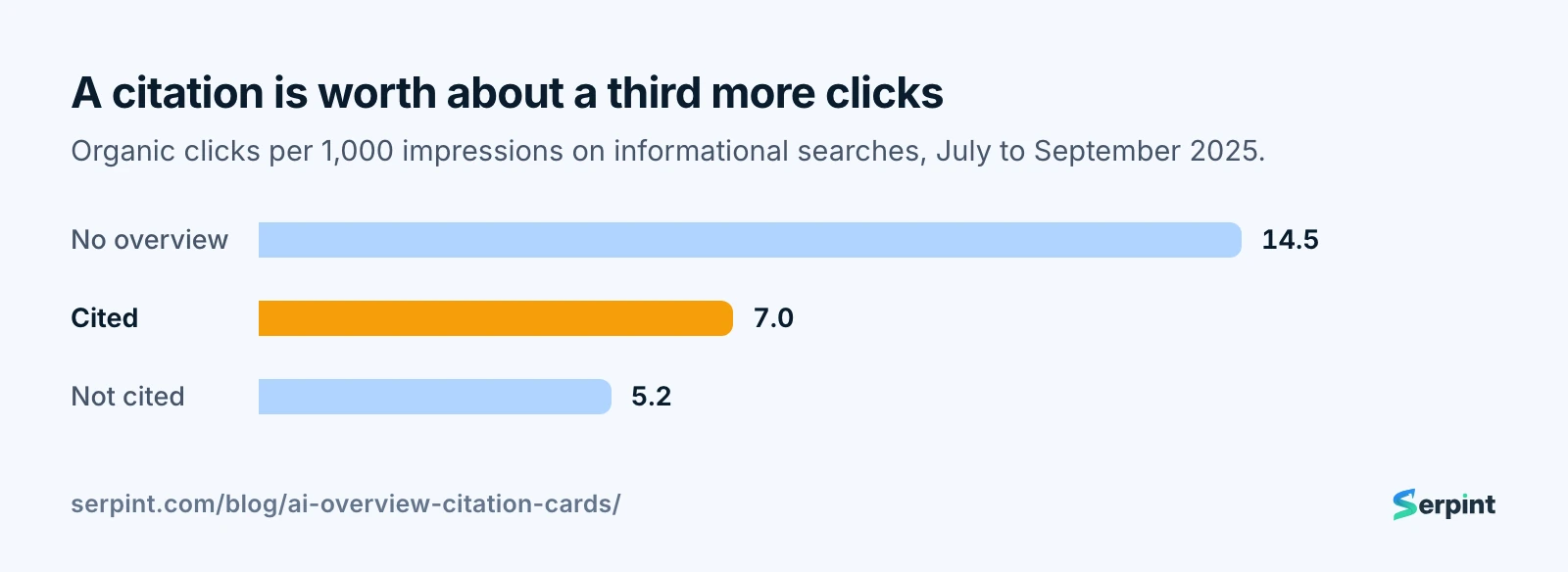
Data: Seer Interactive, informational searches, July to September 2025.
Both numbers sit far below the 14.5 clicks a result gets with no overview at all. A visible card won’t bring that back. My bet is a small lift for the first three cards and nothing for the rest, which makes position inside the overview the new ranking.
Sticky cards could add to that on long overviews. A card that follows you down the answer gets more chances to be noticed than one that scrolls away.
You can’t see any of this in Search Console, though.
How do you check whether you’re in the first three cards?
You check by searching your keywords on desktop and reading the right-hand column, because no Google report shows it. Search Console counts AI Overview clicks inside its Web totals, and its Generative AI report shows impressions only. Neither says which card you got.
Searching by hand works for ten keywords, not a hundred. Results also change between fetches: in our study, about 1 in 17 searches gained or lost an overview between two fetches nine minutes apart.
Serpint does that counting for every keyword you track.
How can Serpint show your AI Overview citations?
Serpint records, for every keyword you track, whether Google shows an AI Overview and whether it cites your site. The Keywords tab marks each one “Cited in AI Overview”, and the SERP features count shows how many of your keywords have an overview and how many cite you.
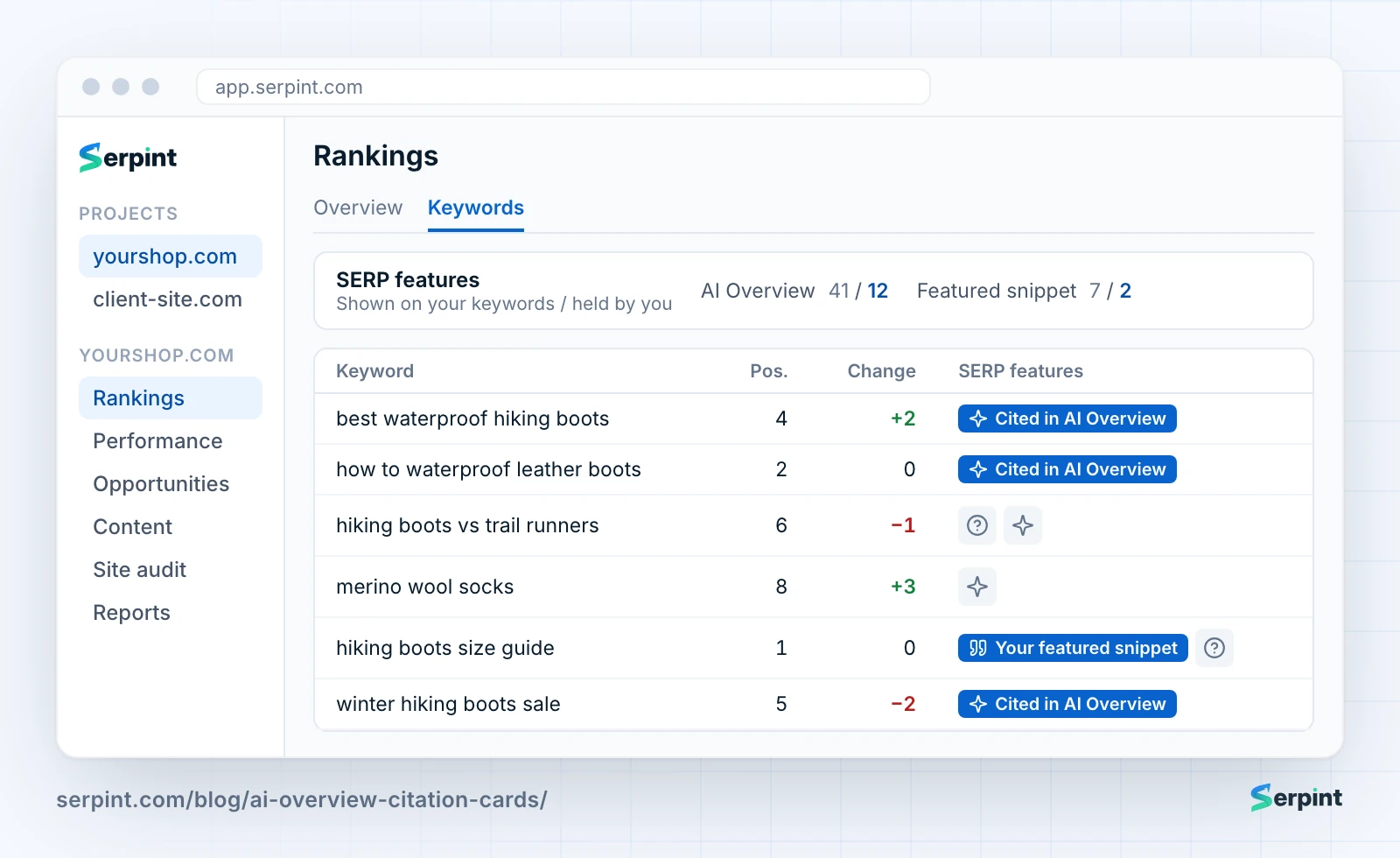
It tells you whether you’re cited, not which card you got. To see who holds the cards, open a content brief for the keyword. Its AI answers tab lists every page Google’s AI Overview cites, marks the ones also in the top 10, and sets them beside ChatGPT’s sources.
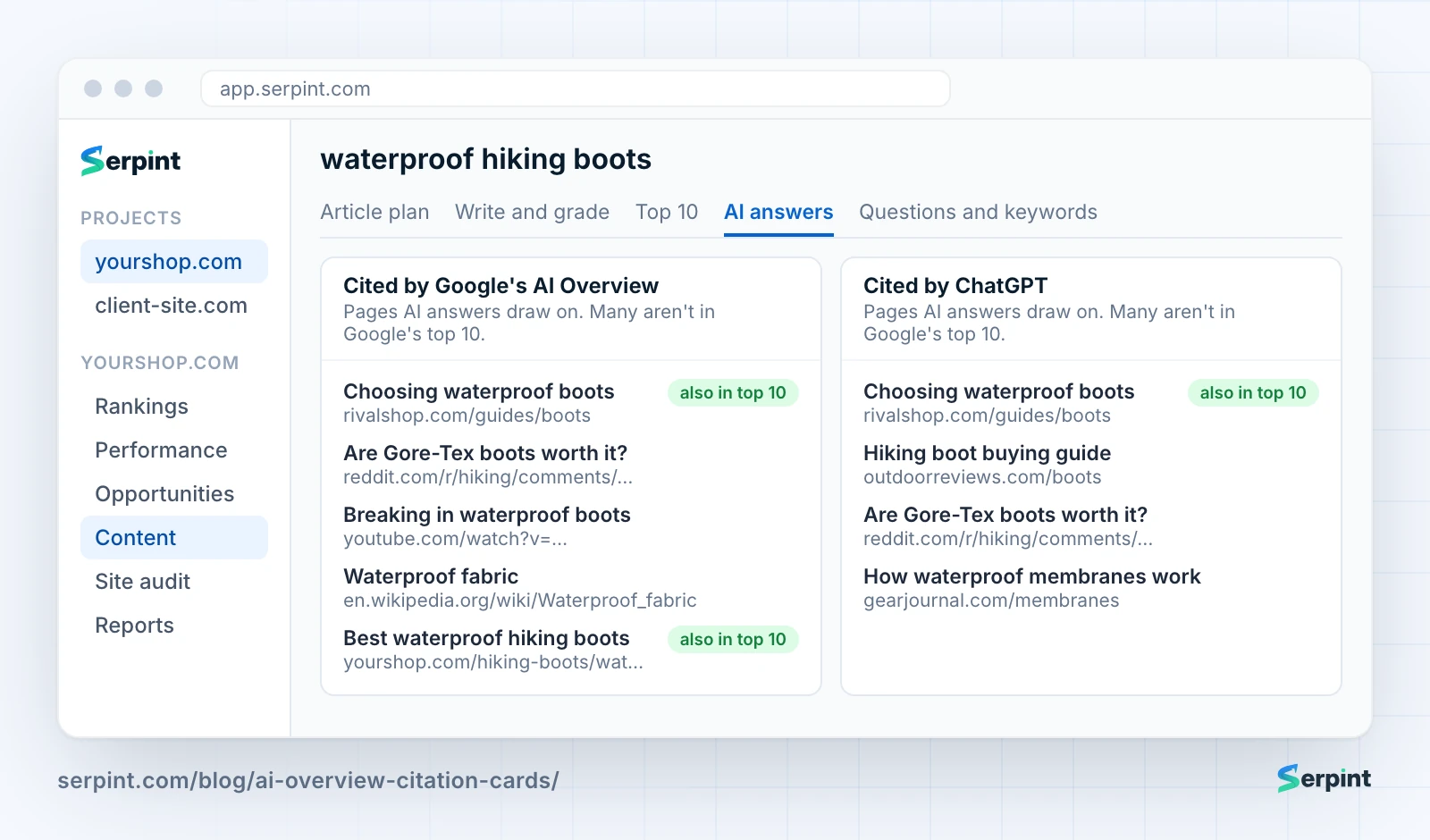
Opportunities lists the rest under “Snippets & AI”: keywords where you rank in the top 10 but the overview doesn’t cite you. Those are the pages to work on first.
How much a front-row card is worth depends on the kind of site you run.
What does it mean for your kind of site?
Publishers and how-to sites have the most to gain. They already hold most of the front-row cards, and long how-to answers are where sticky cards help most.
Online stores have a real chance too. Shops count in the group that gets the front row in our data, so check where you sit on your top product questions.
Video creators get less than the headline numbers suggest. YouTube is in most overviews, but usually behind Show all.
Whatever you run, some things are still unknown.
What don’t we know yet?
We don’t know whether Google will keep the three-card layout or how widely it’s testing sticky cards. We also don’t know how many people click Show all, or how many click a card at all.
Our study’s December re-run will show whether the front-row mix changes. I’ll update this post with it.
What should you do now?
Start with your ten most valuable keywords. Search each on desktop and note whether you’re cited, and in which card.
Then compare the pages in the first three with yours. If you’re cited behind Show all, put a plain answer to the search near the top of your page.
Finally, keep a record for the next month. Google has moved these cards four times since September, and it will likely move them again.
Founder of Serpint
Founder of Serpint. 6+ years in SEO and content marketing and 2 in GTM engineering, most recently as Head of Product and Content at lobstr.io, a B2B SaaS web scraping platform, until October 2026. Writes about SEO, AEO and GEO, the full stack of search and AI answer optimization, and content marketing.