News
Black Friday AI shopping: lists win ChatGPT, not Google
A study shows how AI shopping answers change in Black Friday week, OpenAI rewrote its shopping disclosure, and our data shows what Google's AI cites.

· 9 min read
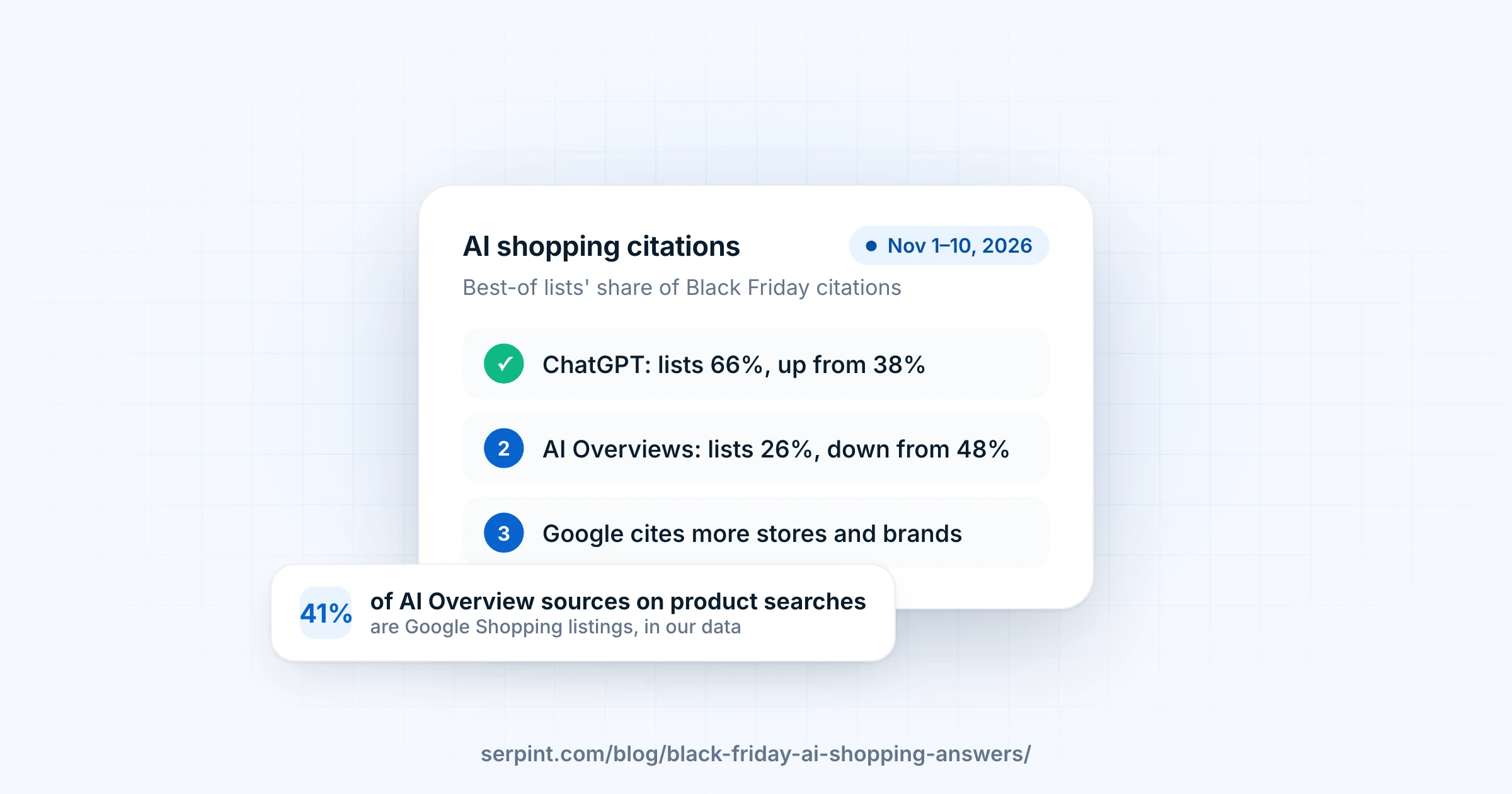
Black Friday AI shopping answers switch to best-of lists in the week before the sale: in iPullRank’s study of 416 shopping prompts, lists took 78% of superstore citations last year. This year ChatGPT leans on lists even more, while Google’s AI Overviews cite stores, brands and Google Shopping.
✅ My advice Before tomorrow, check your product feed in Google Merchant Center and put 2026 in your Black Friday page’s title and H1. Then find the best-of lists that rank for your products. Don’t redesign anything this week.
What did the Black Friday AI shopping study find?
Best-of lists take over AI shopping answers in the last 10 days before Black Friday. iPullRank tracked 416 prompts in toys, superstores and footwear with Profound, on ChatGPT and up to seven other AI platforms, through November 10, 2026.
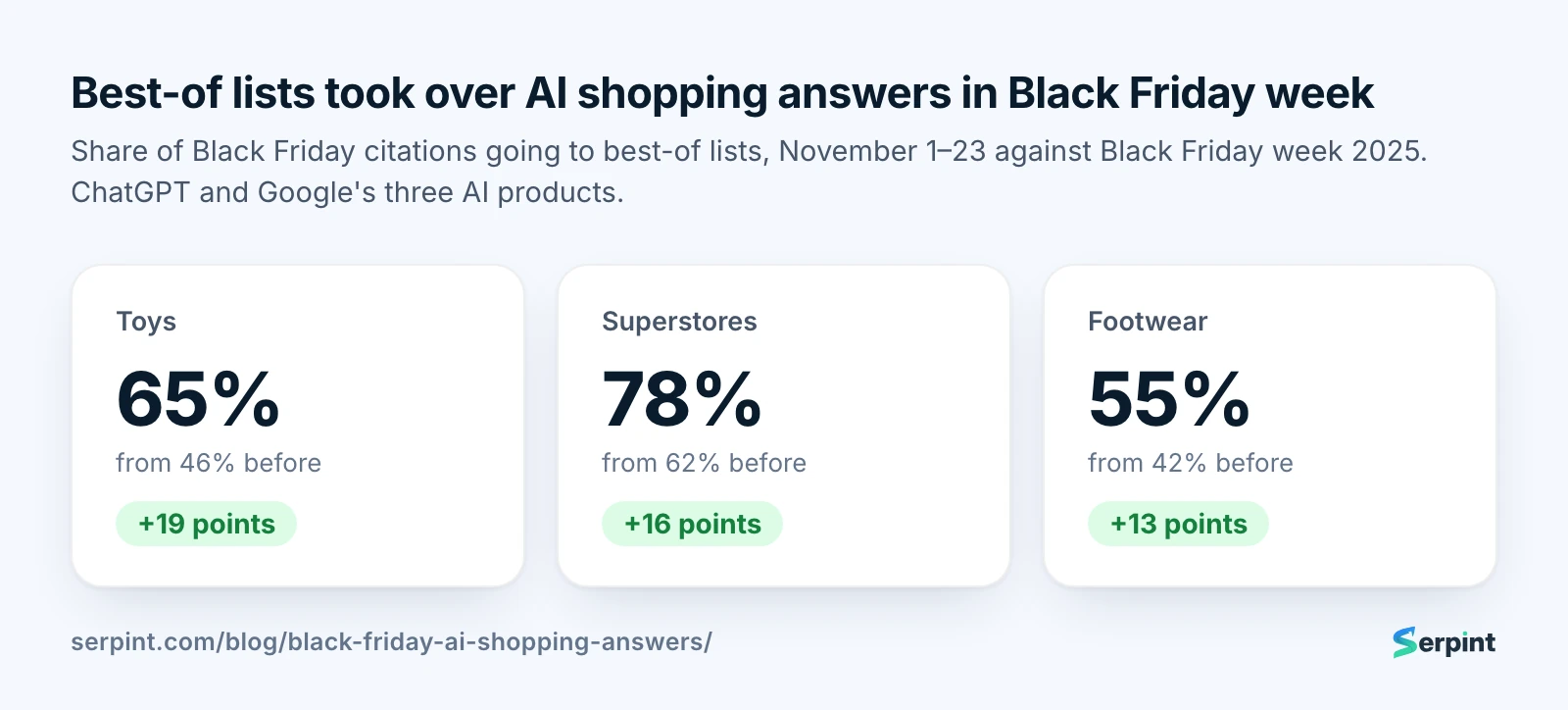
Data: iPullRank/Profound, November 2025.
Brand websites didn’t gain on any AI platform. ChatGPT and Google’s AI Overviews drove the shift. On superstore prompts in Black Friday week, 94% and 89% of their citations went to lists, against 48% on Perplexity.
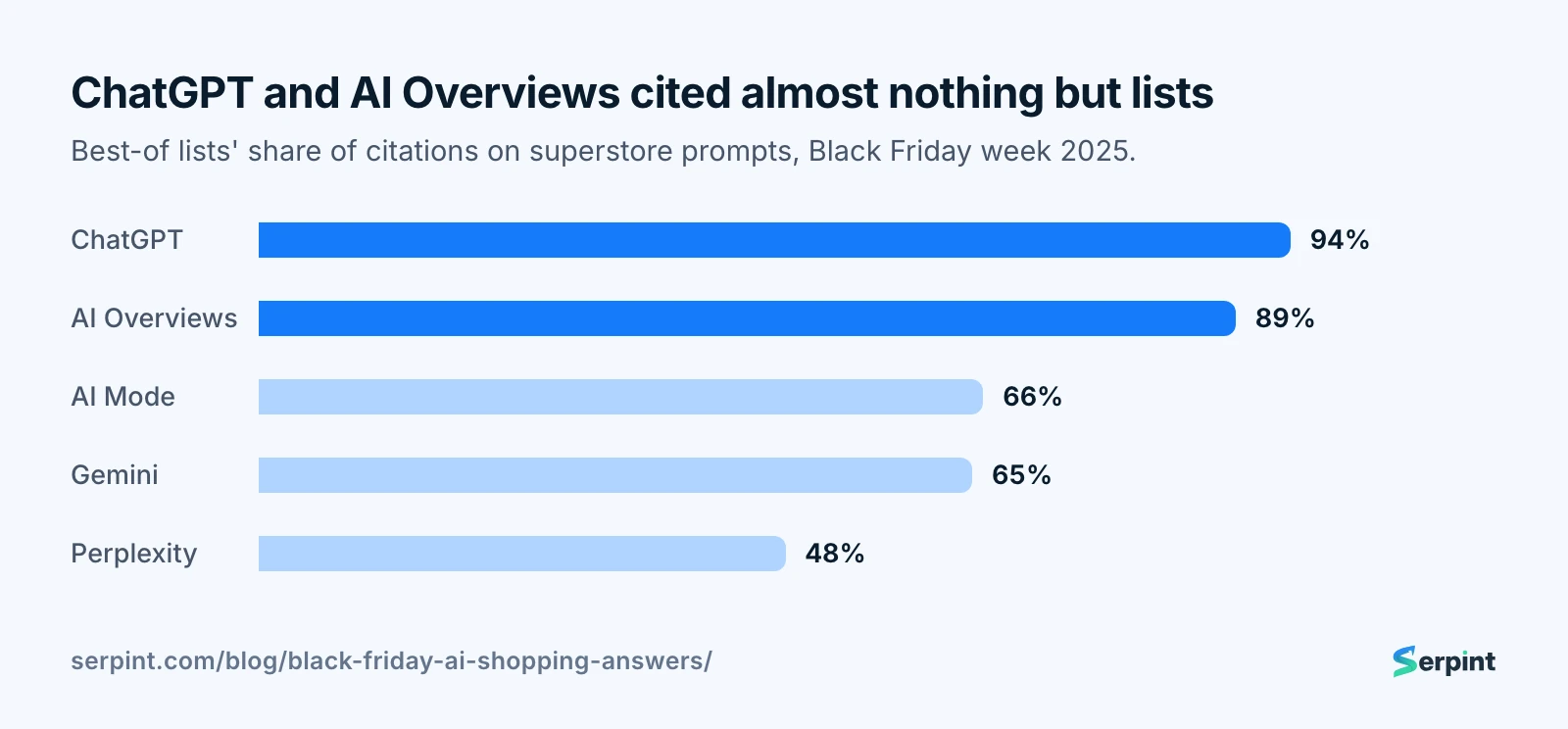
Data: iPullRank/Profound, Black Friday week 2025.
The pages that won were mostly new ones, and that’s the part you can still act on.
Why do AI answers switch to this year’s pages?
AI answers switch late, in the final two weeks. ChatGPT cited pages with 2025 in the address 6% of the time on November 1, 20% on November 14 and 53% on Black Friday.
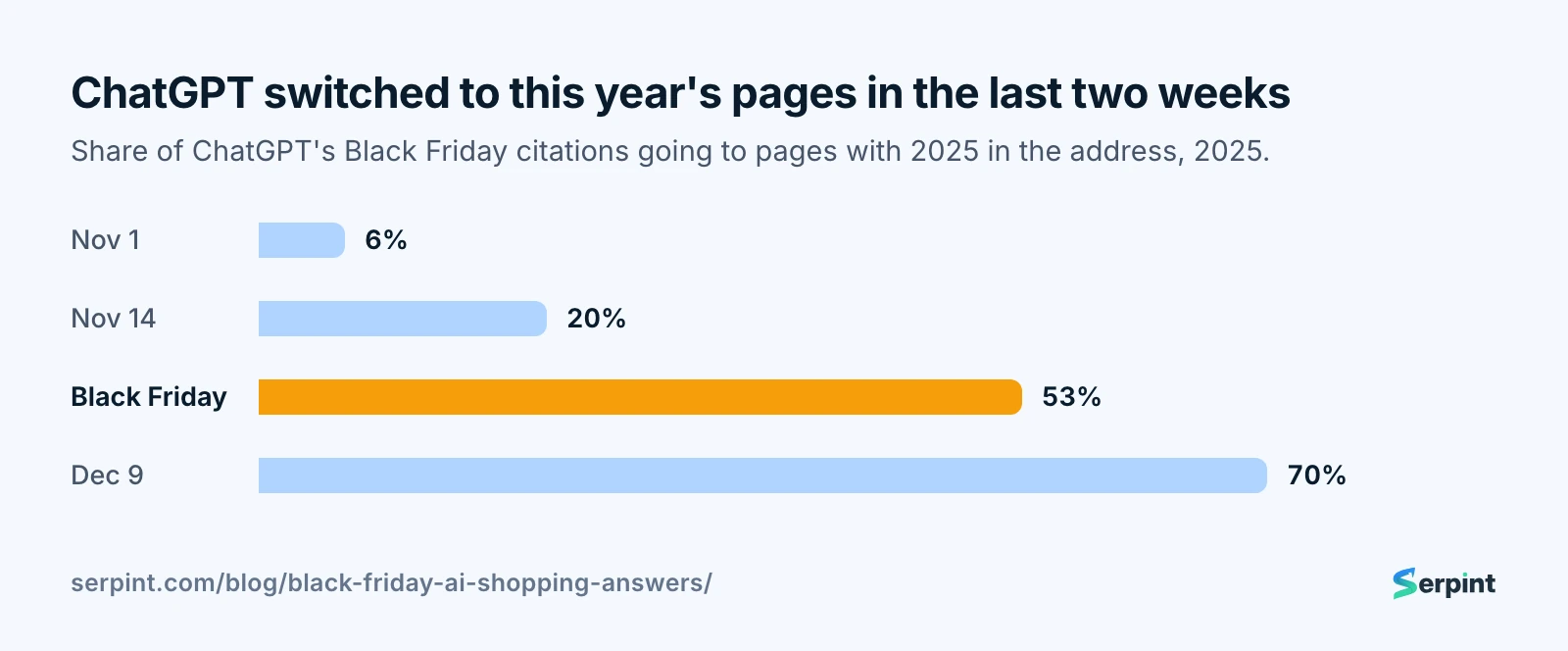
Data: iPullRank/Profound, 2025.
Of Black Friday week citations to the 200 most-cited pages, 54% went to pages first seen after August 1. Older pages updated to say 2025 got 13%, and they showed the year in the title or H1, never the URL.
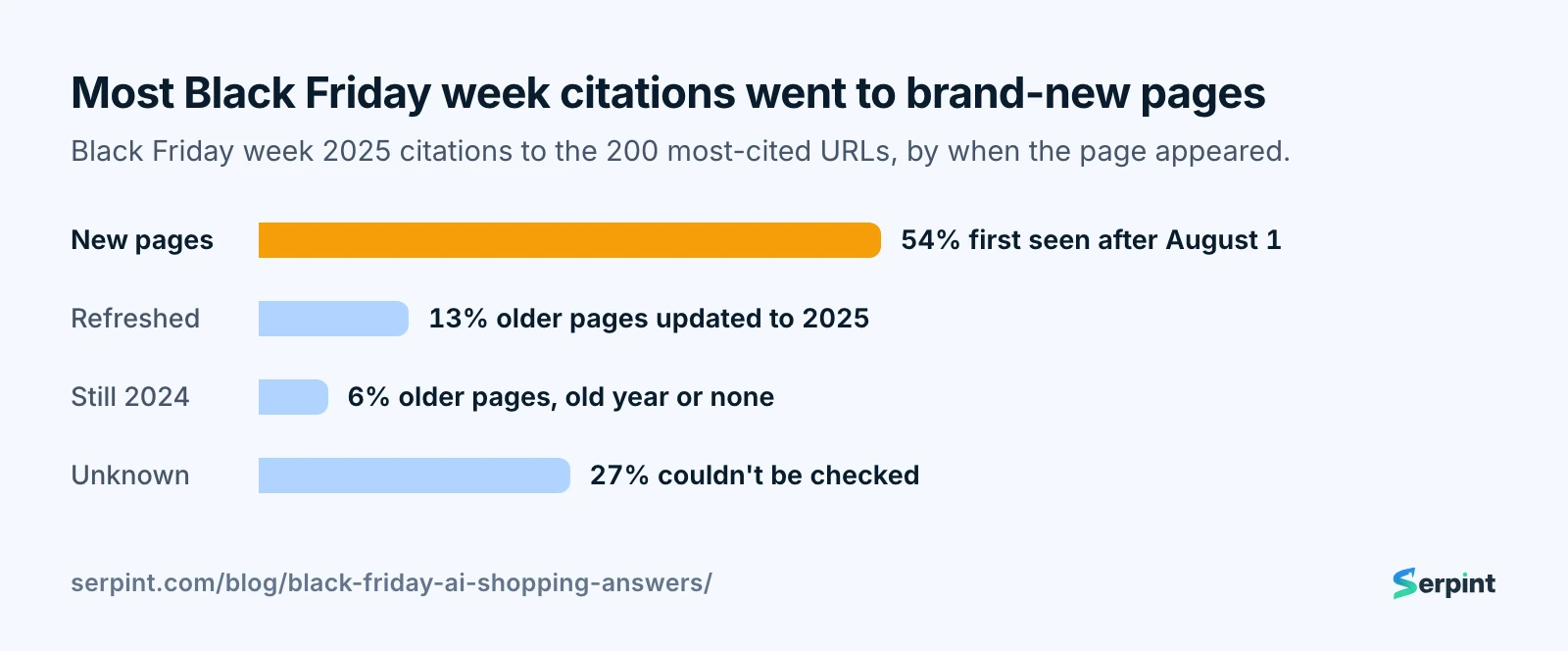
Data: iPullRank/Profound, Black Friday week 2025.
If you keep one evergreen Black Friday URL, put 2026 in its title and H1 today. A brand-new page now is probably too late to be found.
That was 2025, and 2026 already looks different.
What’s different about Black Friday 2026?
ChatGPT and Google are moving in opposite directions. From November 1 to 10, best-of lists rose from 38% to 66% of ChatGPT’s Black Friday citations. In AI Overviews they fell from 48% to 26%, as brand sites and retailers gained.
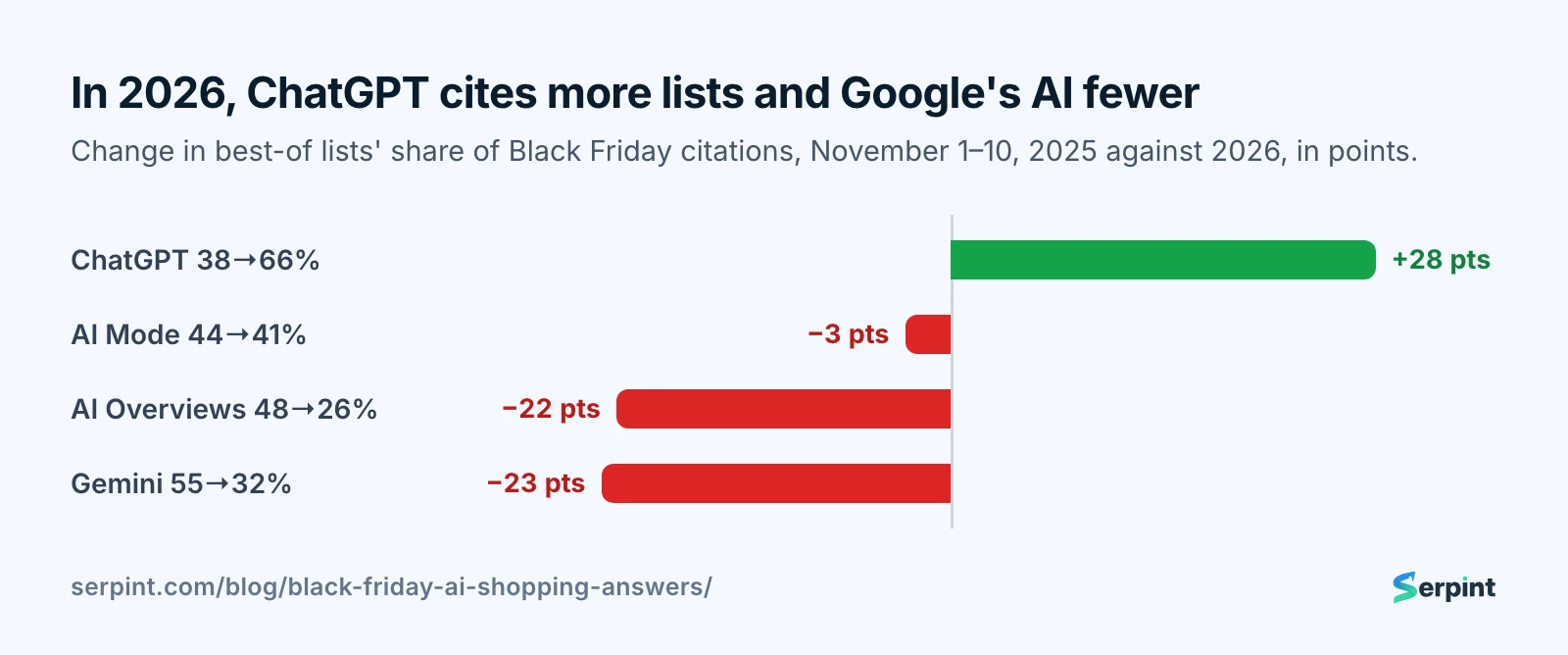
Data: iPullRank/Profound, November 1 to 10, 2025 and 2026.
ChatGPT’s product tiles now link to one store each, usually Walmart. On superstore prompts, Walmart’s share of tiles rose from 12% to 58%, and of ChatGPT’s citations from 1.8% to 6.7%.
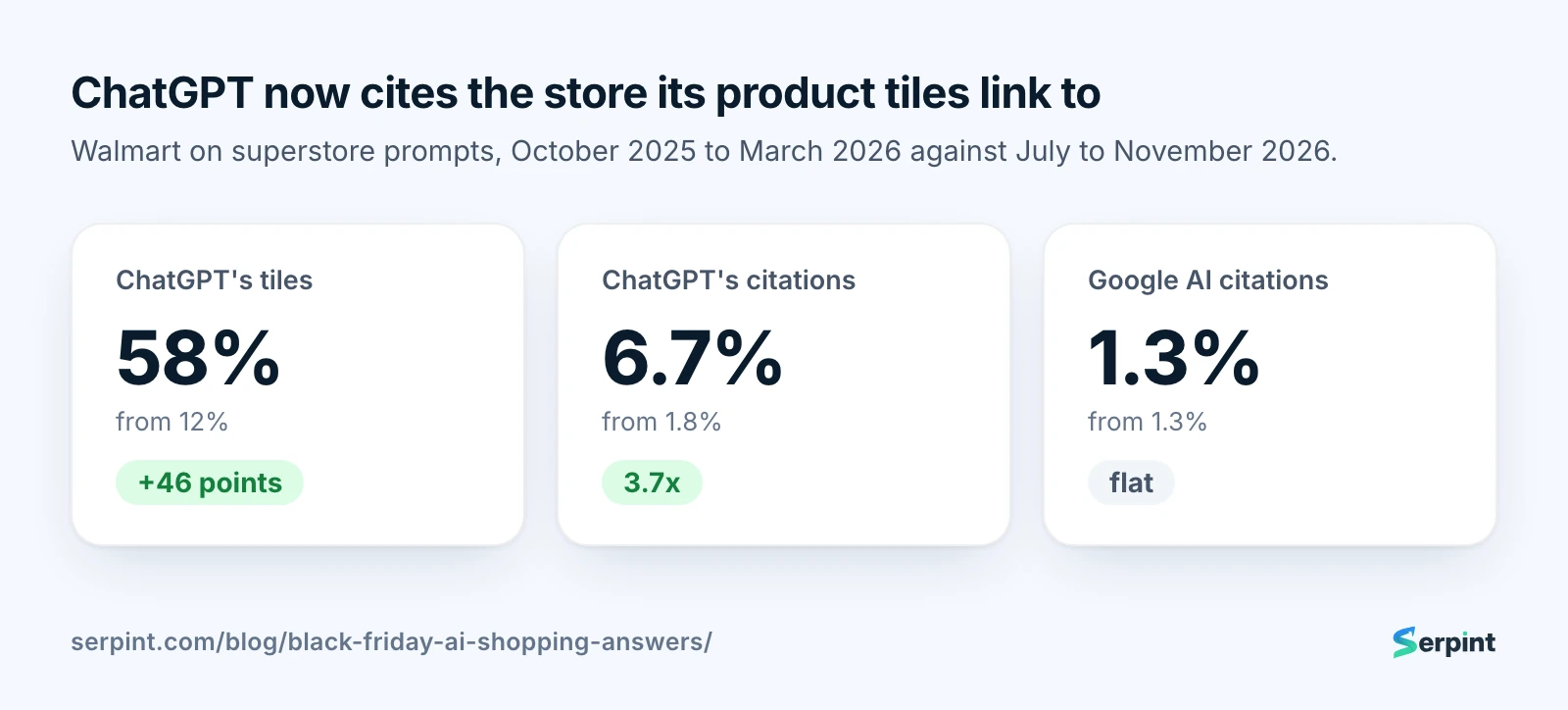
Data: iPullRank/Profound.
Google’s move away from lists made me check what its AI Overviews cite for shopping searches.
What do Google’s AI Overviews cite for product searches?
Google’s AI Overviews cite Google itself most for product searches. In our data, 41% of their sources were links to Google’s own Shopping product pages. Stores made up 18%, brands 15% and publishers only 10%.
We read 222 US desktop product searches in electronics, outdoor gear, furniture and fashion, against 50 informational ones in the same categories. Both got an AI Overview about 9 times in 10, but only product searches got Google’s products grid (92% against 6%).
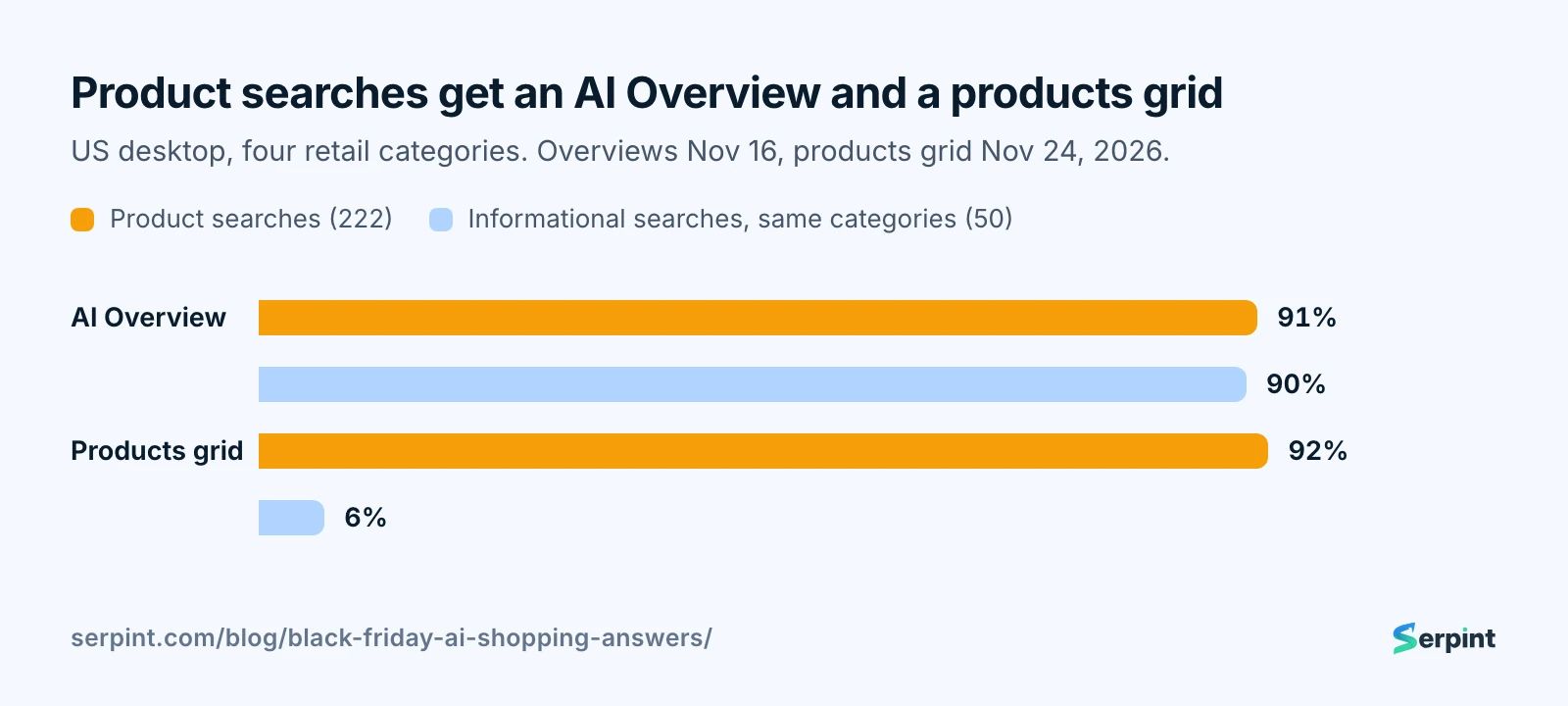
Data: Serpint’s US results pages, desktop: overviews November 16, products grid November 24, 2026.
Informational searches cite YouTube and forums instead, 22% each.
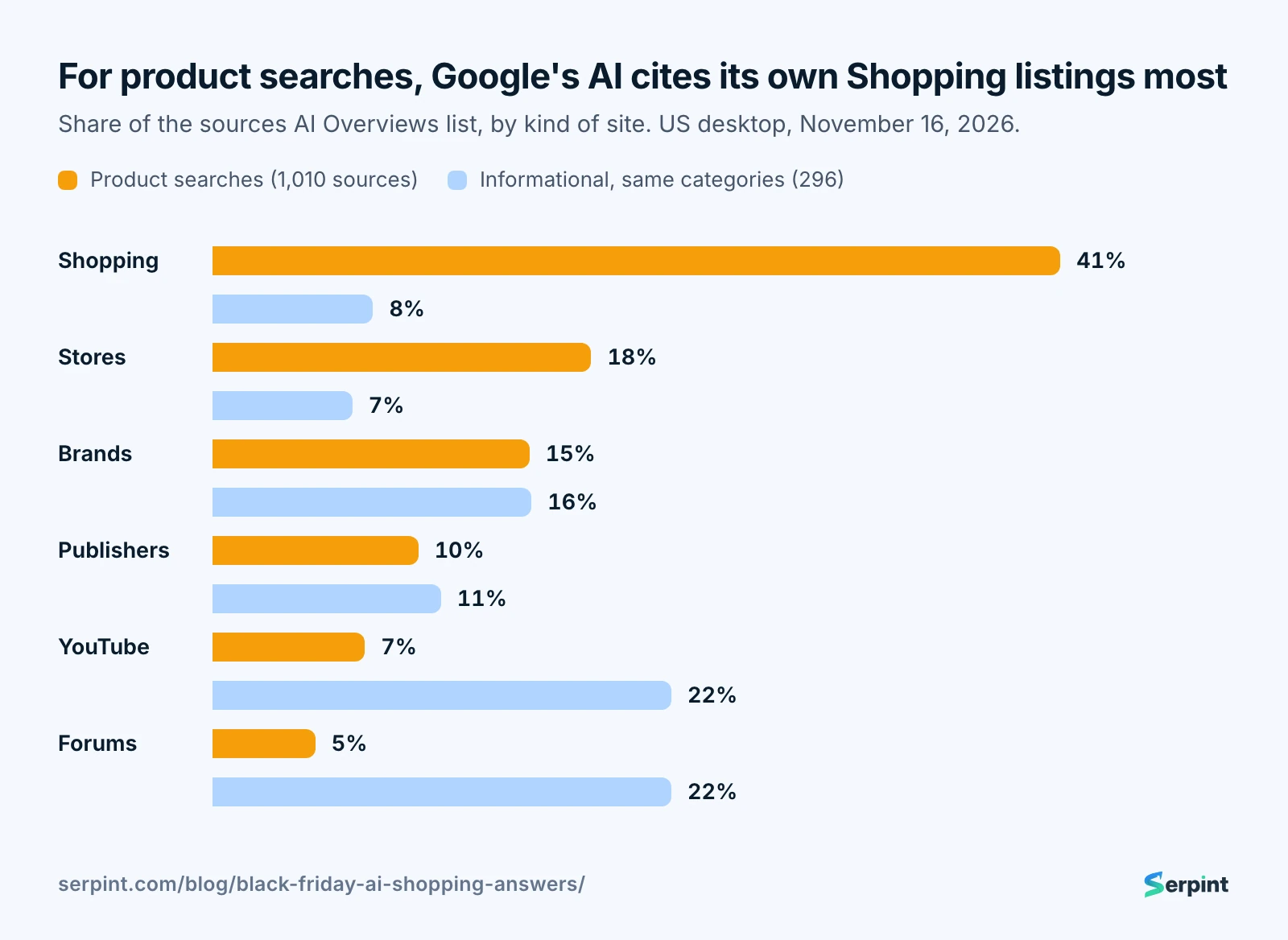
Data: Serpint’s US results pages, desktop, November 16, 2026.
The Shopping links mostly sit behind Show all, though: they’re 8% of the three cards people see. Stores hold 32% of those cards, brands 28%.
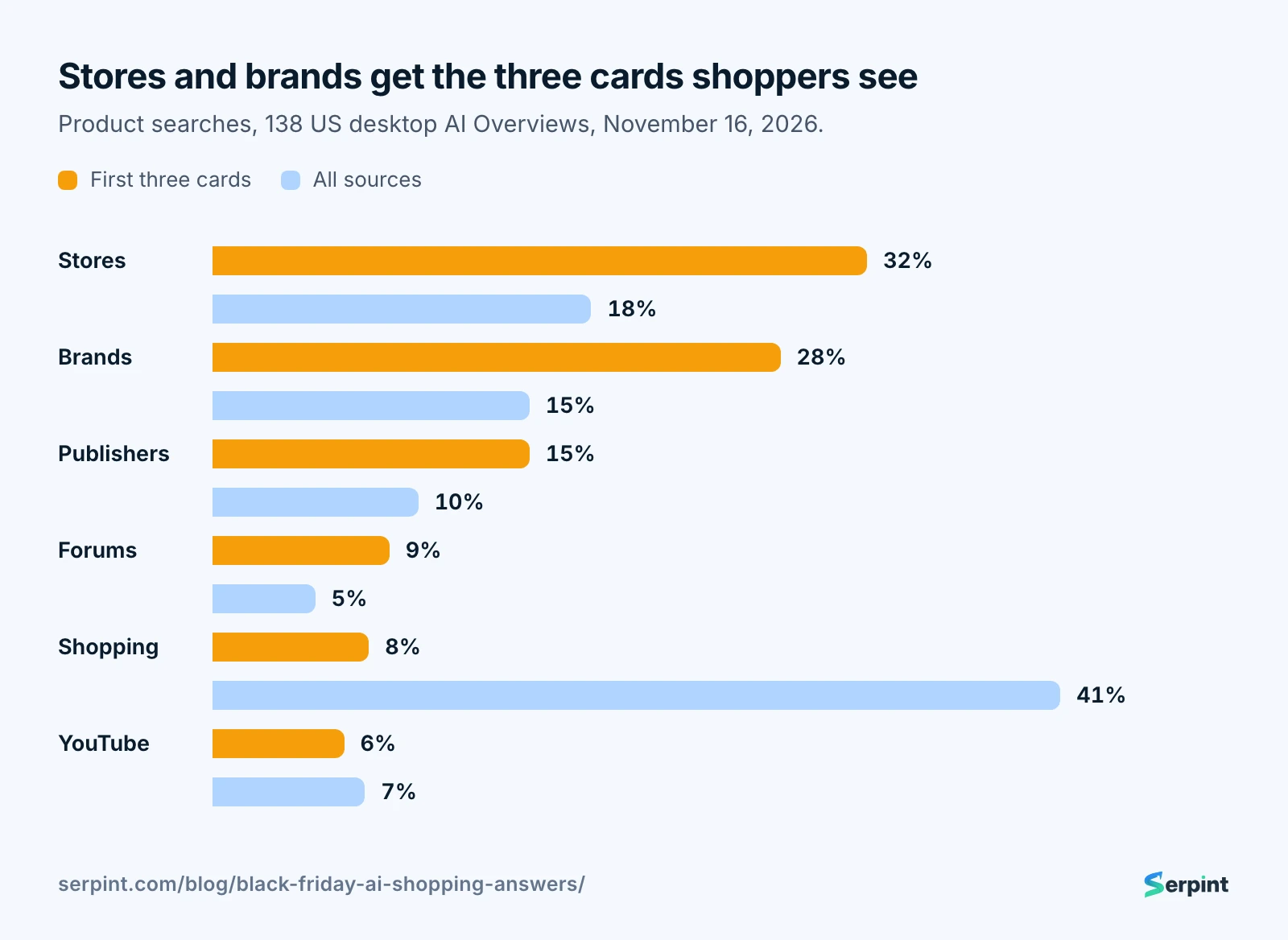
Data: Serpint’s US results pages, desktop, November 16, 2026.
On “best” and comparison searches, publishers held 38% of the first three cards. On price and deal searches, stores held 53% and publishers none. Those are 20 and 12 overviews, so read them as a direction.
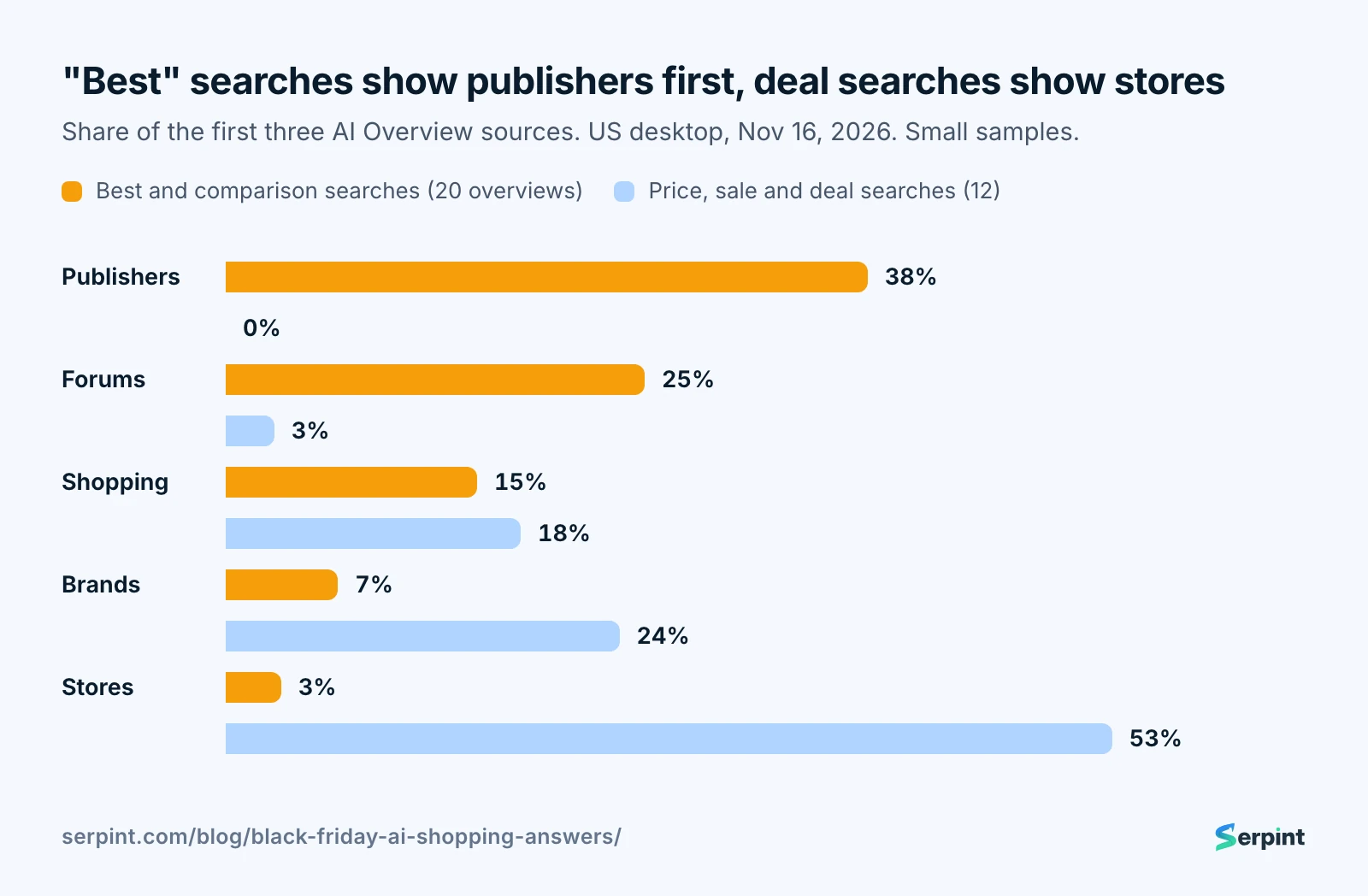
Data: Serpint’s US results pages, desktop, November 16, 2026.
Ranking doesn’t mean a store gets cited. Amazon sits in Google’s top 10 on 67% of these searches, but the overview cites it on 18%. A same-day check on 92 of them, both from November 24, shows the same gap: 77% against 25%.
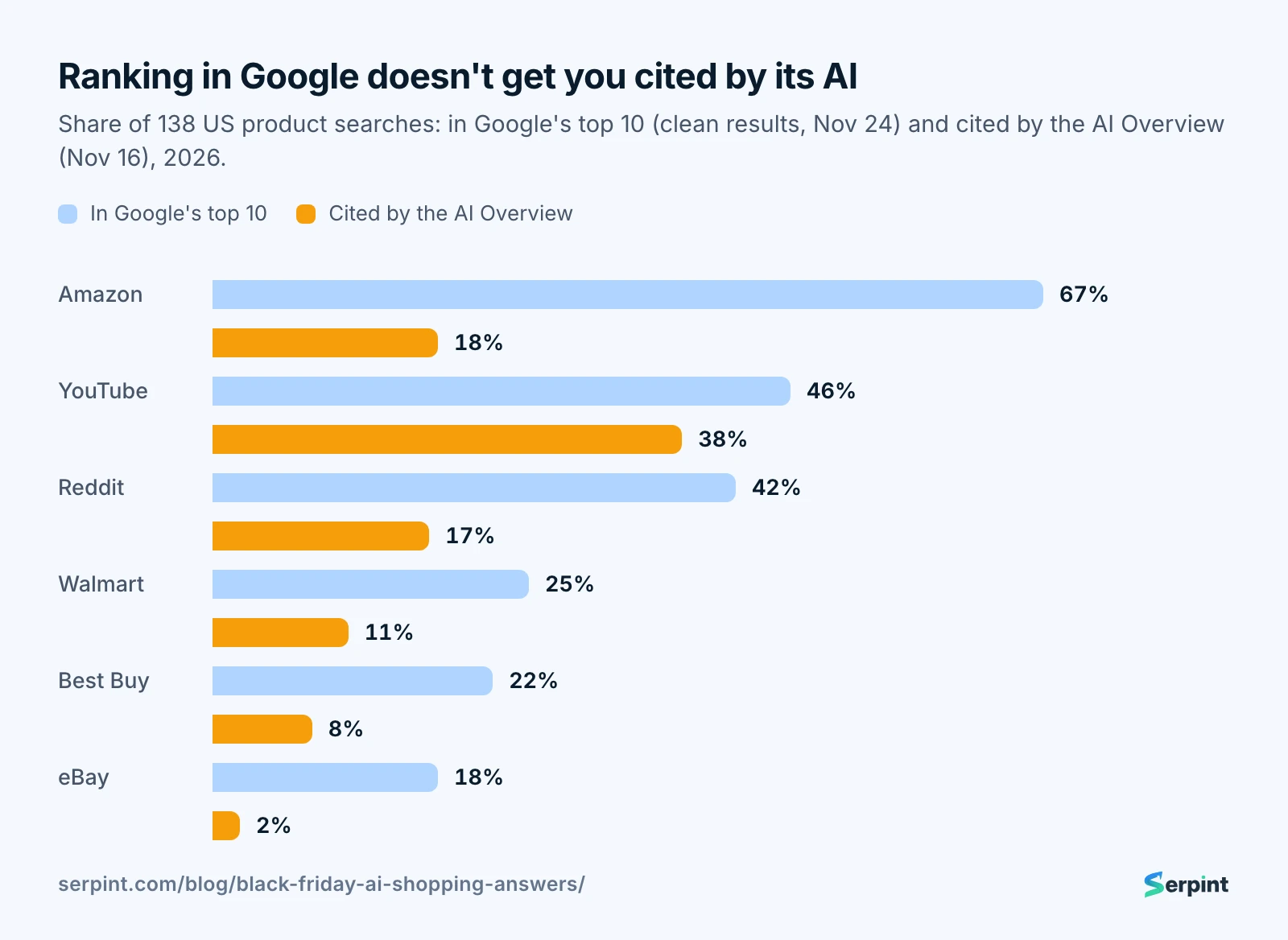
Data: Serpint’s US results pages: top 10 checked for poisoned results, November 24; overviews, November 16, 2026.
💡 My take On Google, the AI shopping answer is built from product data, not articles. Your product feed is now an SEO asset. ChatGPT is the opposite bet this year: it wants a list that names you.
ChatGPT’s own rules for picking products also changed this week.
What did OpenAI change in ChatGPT shopping?
OpenAI dropped its line that partnerships don’t influence product results. On November 4, its help page said results “are selected independently by ChatGPT and are not ads, nor influenced by any OpenAI partnerships”. That line is gone.
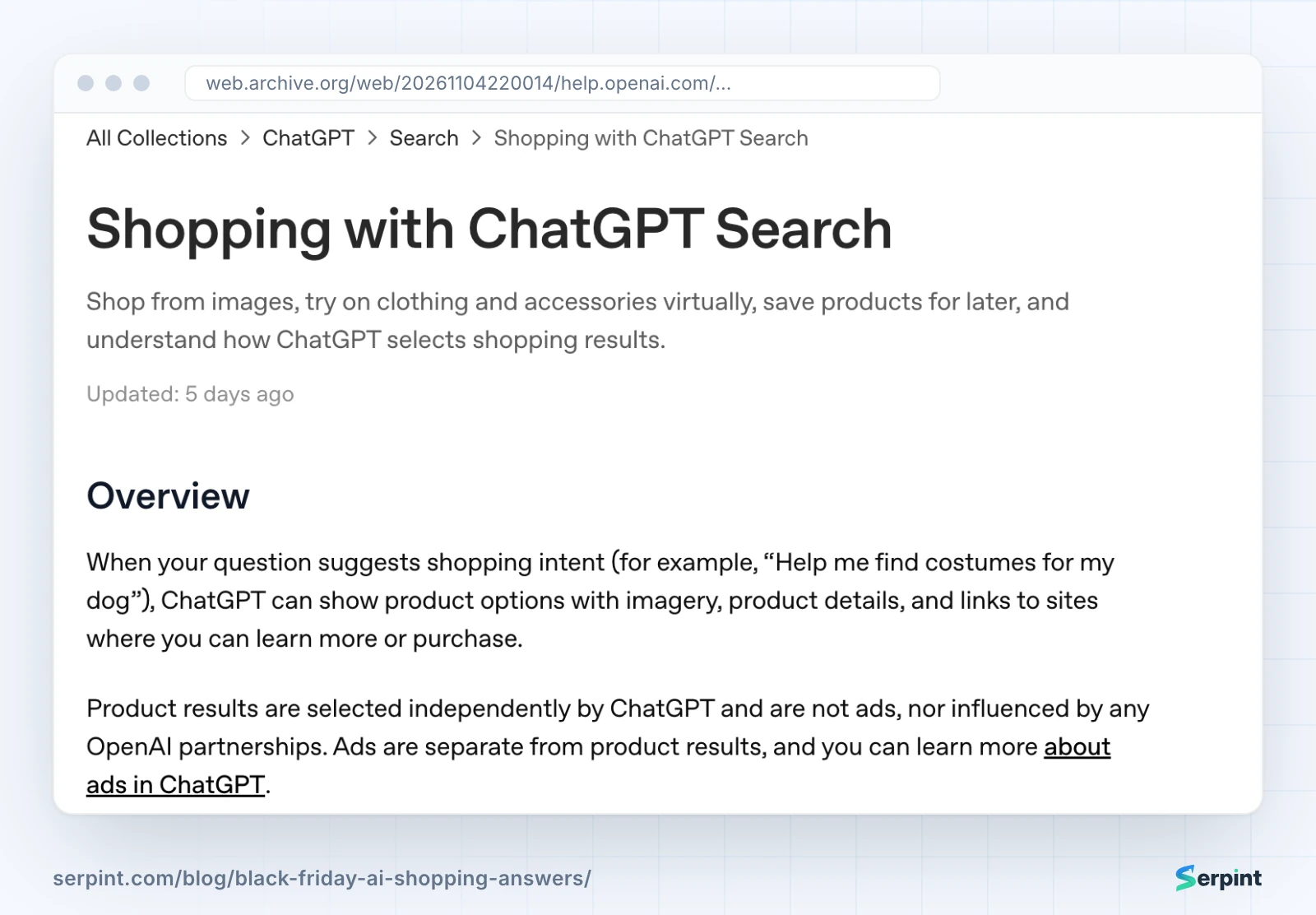
The page on November 4, 2026, from the Internet Archive.
The live page now says only that product results aren’t ads, and how selection works. Search Engine Roundtable reported the change on November 23.
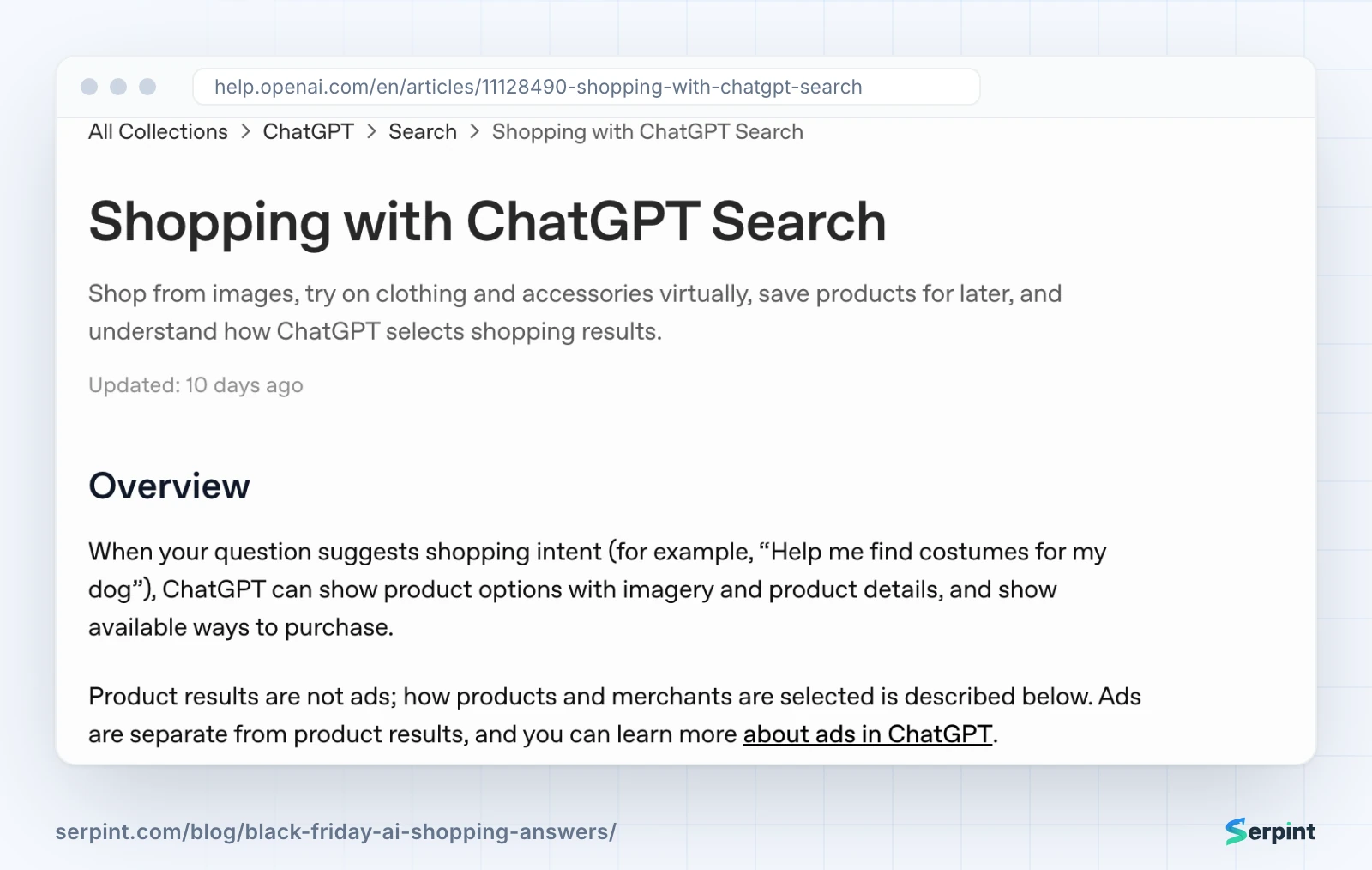
The same page on November 26, 2026.
ChatGPT ranks merchants by availability, price and quality. Shopify stores are included through Shopify’s catalog; others can apply at chatgpt.com/merchants.
The same week, Business Hub got a “Connect an ad account” card that links to ChatGPT Ads Manager.
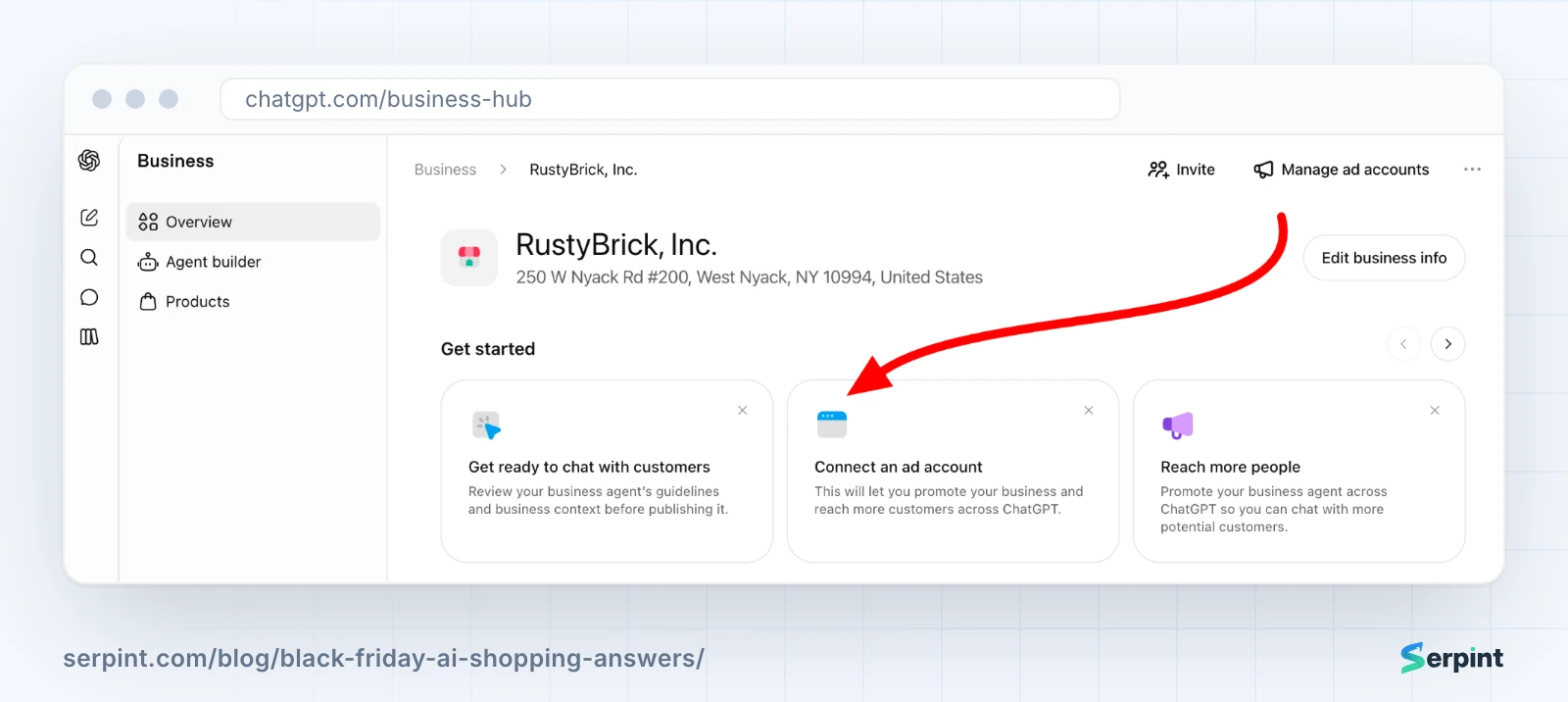
CC: Barry Schwartz
The change doesn’t prove deals shape results. But a disclosure that stops promising independence, while ads get a button in Business Hub, is worth watching.
What you do about all this depends on what you sell.
What does it mean for your kind of site?
Online stores should fix product data first. Google Shopping pages lead the sources in Google’s AI Overviews, and ChatGPT ranks merchants on stock and price. A correct sale price beats a new blog post.
Affiliate and comparison sites get their best week in ChatGPT, if the list is dated 2026 and already live. On Google, “best” searches still show publishers first; deal searches go to stores.
Brands didn’t gain in Black Friday week in iPullRank’s data, but in ours they hold 28% of Google’s front-row cards. Get into the lists ChatGPT cites, and keep product pages’ prices current.
Checking all this by hand means searching each product term daily and reading every source. It still won’t tell you whether AI visits buy anything.
How can Serpint show your AI shopping visibility?
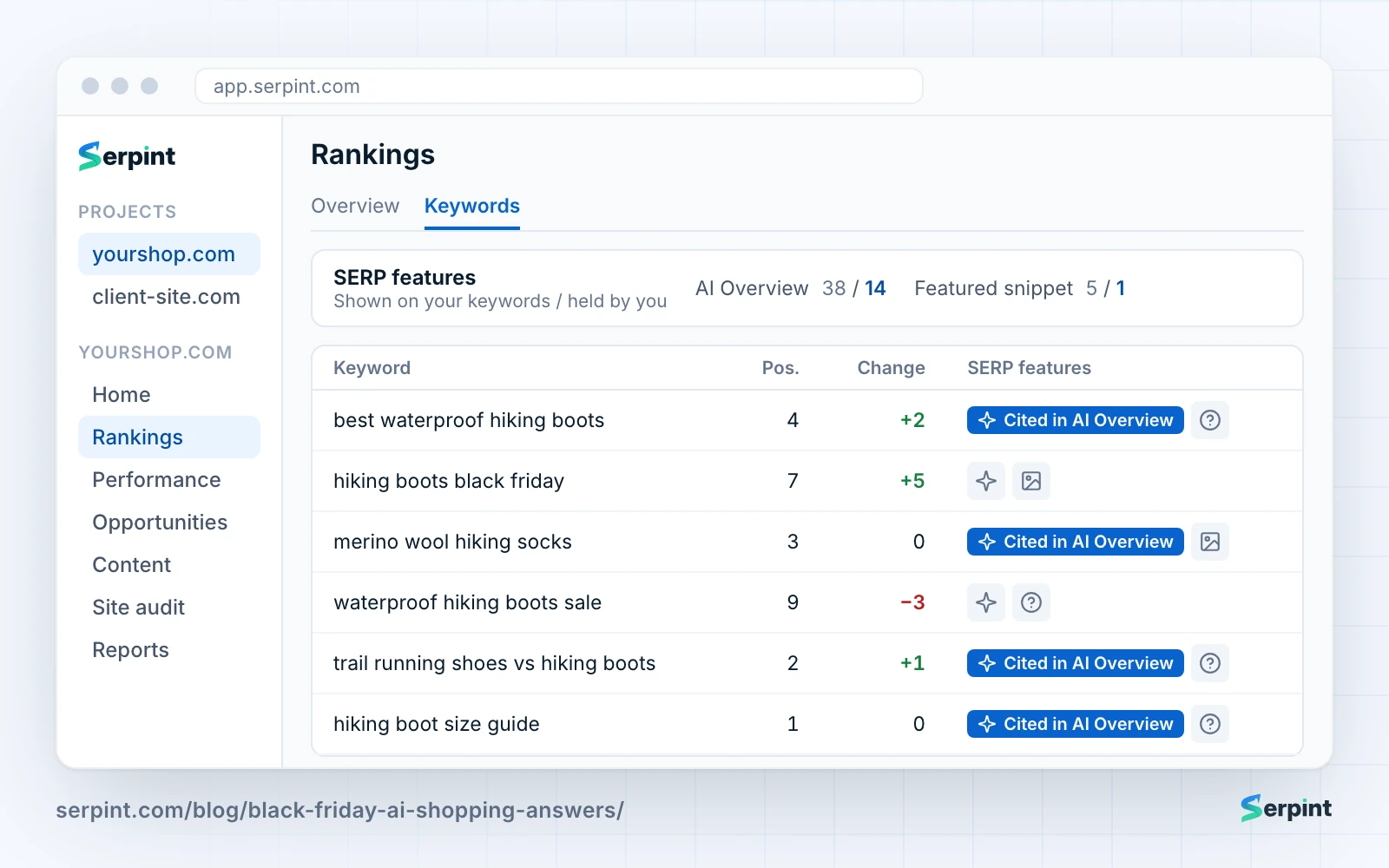
Serpint records, for every keyword you track, whether Google shows an AI Overview and whether it cites your site. The Keywords tab marks each one “Cited in AI Overview”, and Opportunities lists keywords where you rank but the overview doesn’t cite you.
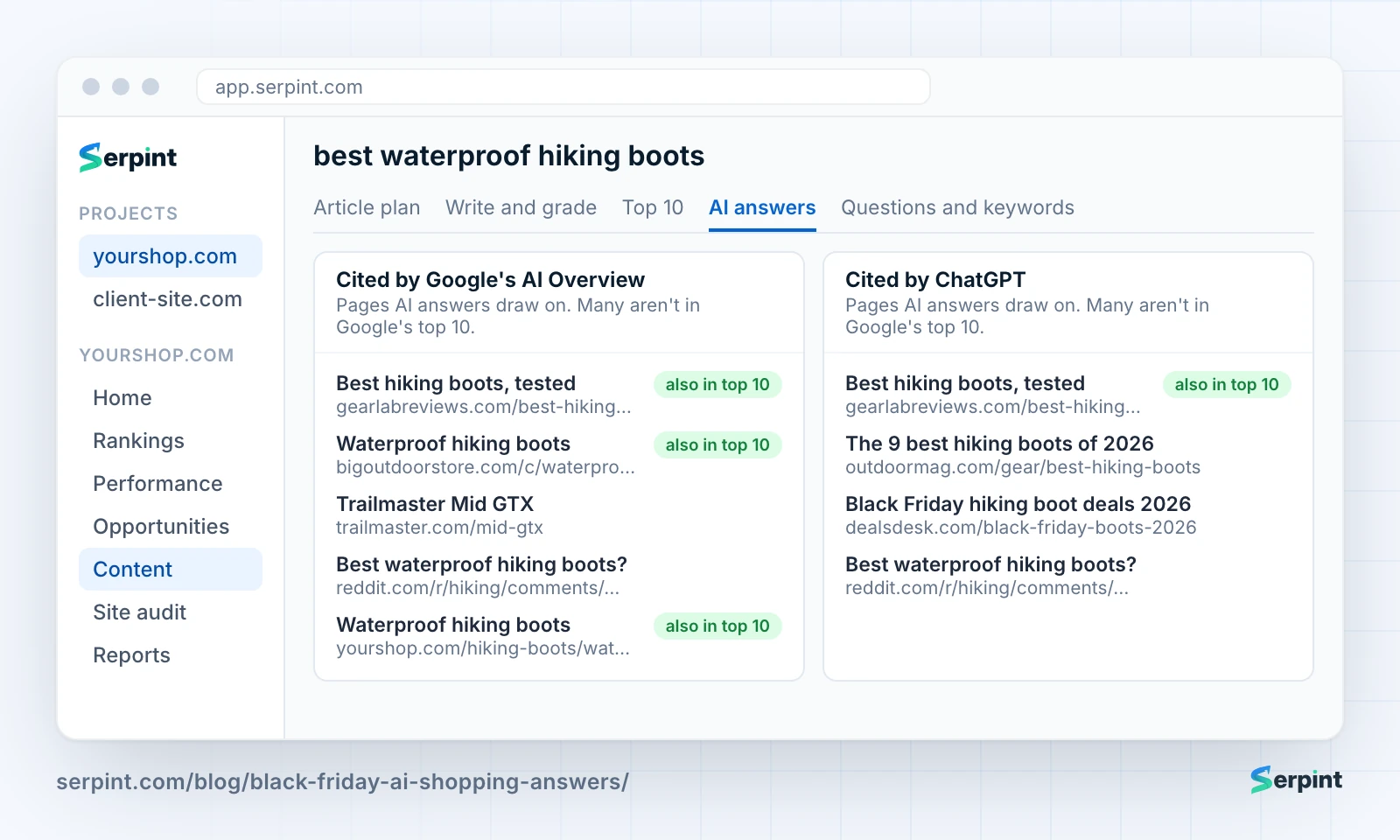
A content brief’s AI answers tab lists the pages Google’s AI Overview and ChatGPT cite for a keyword, marking the ones also in Google’s top 10. For a “best” keyword, that’s your list of lists to get into.
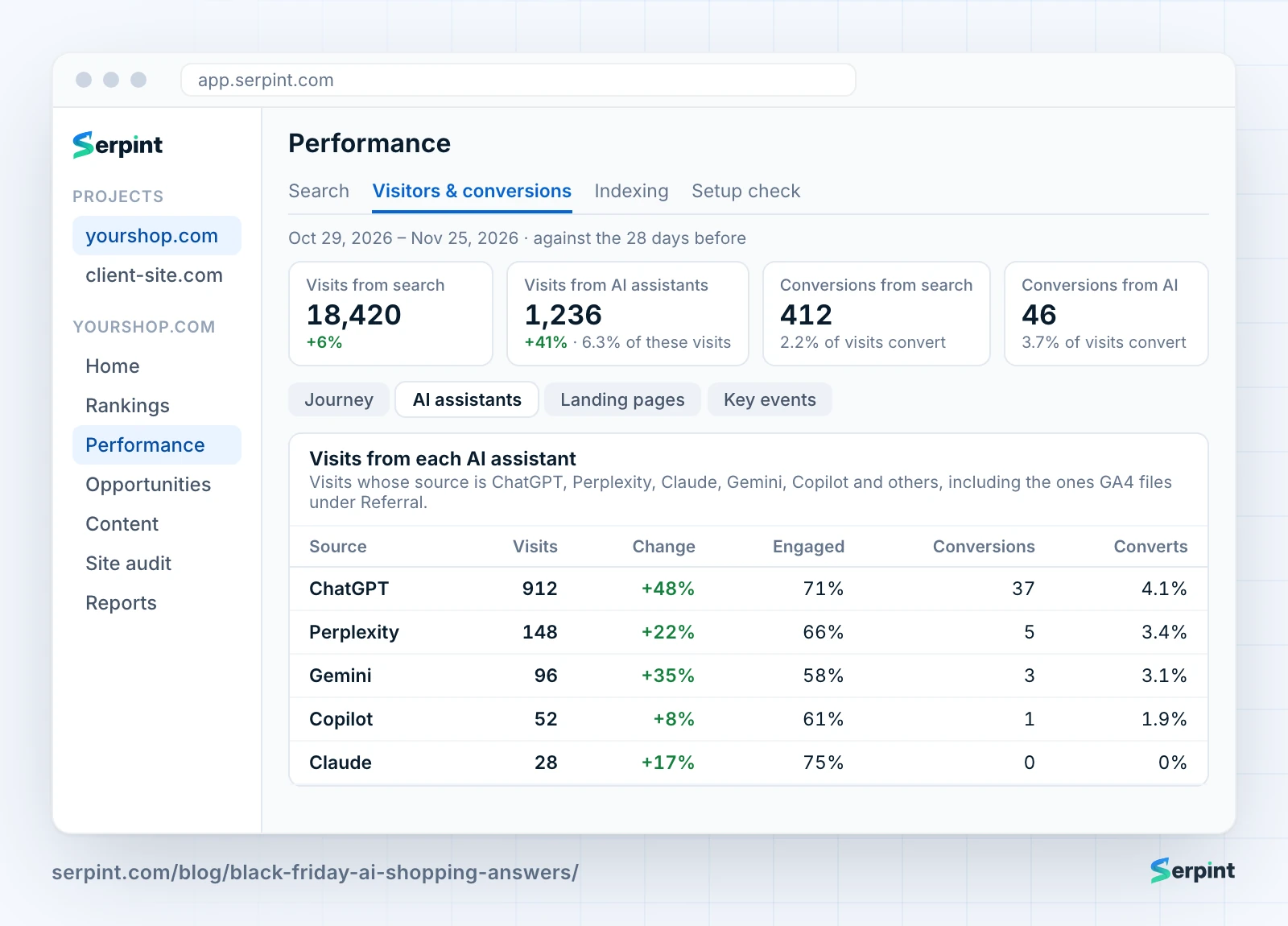
With GA4 linked, Performance → Visitors & conversions shows visits and conversions from AI assistants next to search, assistant by assistant. This week, that’s where ChatGPT’s shoppers show up, and whether they buy.
What will happen this Black Friday week?
My bets for this week, to be checked after Cyber Monday against iPullRank’s promised update and our December re-run:
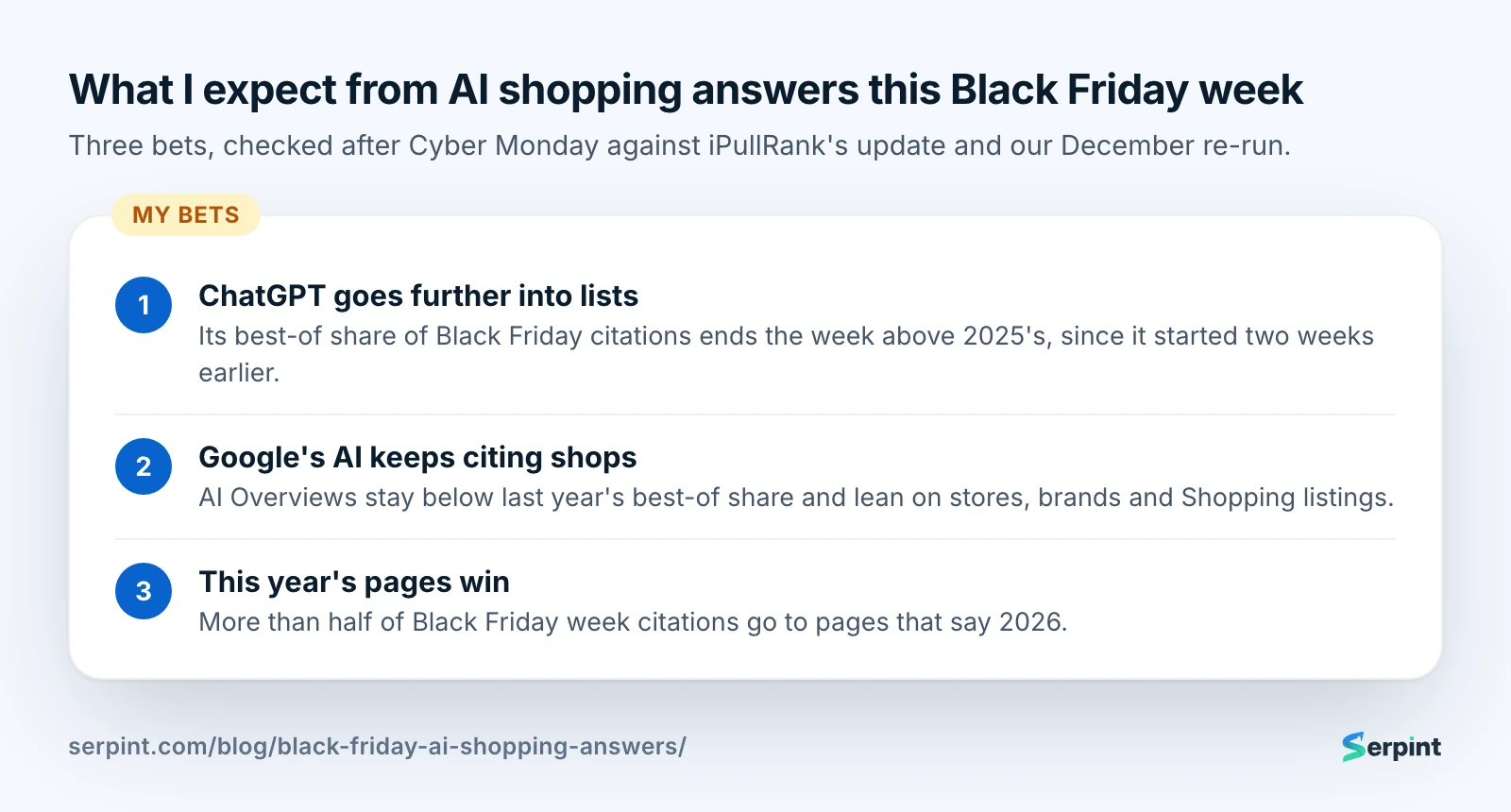
- ChatGPT goes further into lists. It ends the week above 2025’s best-of share; it started two weeks earlier.
- Google’s AI keeps citing shops. AI Overviews stay below last year’s 89% on superstore prompts.
- This year’s pages win. Over half of Black Friday week citations go to pages that say 2026.
Any of these could go the other way, and some things can’t be known yet.
What don’t we know yet?
We don’t know how this Black Friday will go: iPullRank’s data ends November 10. Its data also records answers, not clicks or sales.
Ours is Google’s AI Overviews on US desktop in mid-November, not ChatGPT and not Black Friday searches. 222 searches is a small sample. Nor do we know whether any OpenAI partnership shapes a product result today. So plan for what you control.
What should you do before tomorrow and during the week?
Before tomorrow, fix your product data and make your Black Friday page say 2026. During the week, watch what AI answers cite and send you rather than change things.
- Check your Merchant Center feed tonight: sale prices, stock, free listings on.
- Put 2026 in your Black Friday page’s title and H1; keep its URL.
- Search your five top product terms in ChatGPT and Google, and note who they cite.
- Watch visits and conversions from AI assistants daily.
- Note which lists cite your competitors, for next year’s pitches.
✅ My advice Change nothing big until Cyber Monday is over. Then compare the week with the one before it, and see which answers sent buyers.
Founder of Serpint
Founder of Serpint. 6+ years in SEO and content marketing and 2 in GTM engineering, most recently as Head of Product and Content at lobstr.io, a B2B SaaS web scraping platform, until October 2026. Writes about SEO, AEO and GEO, the full stack of search and AI answer optimization, and content marketing.