News
Google ranking updates now come with notice and feedback
Google ranking updates now get advance notice and a feedback route in Search Console. How to file feedback on the November core update, and what it's worth.

· 8 min read
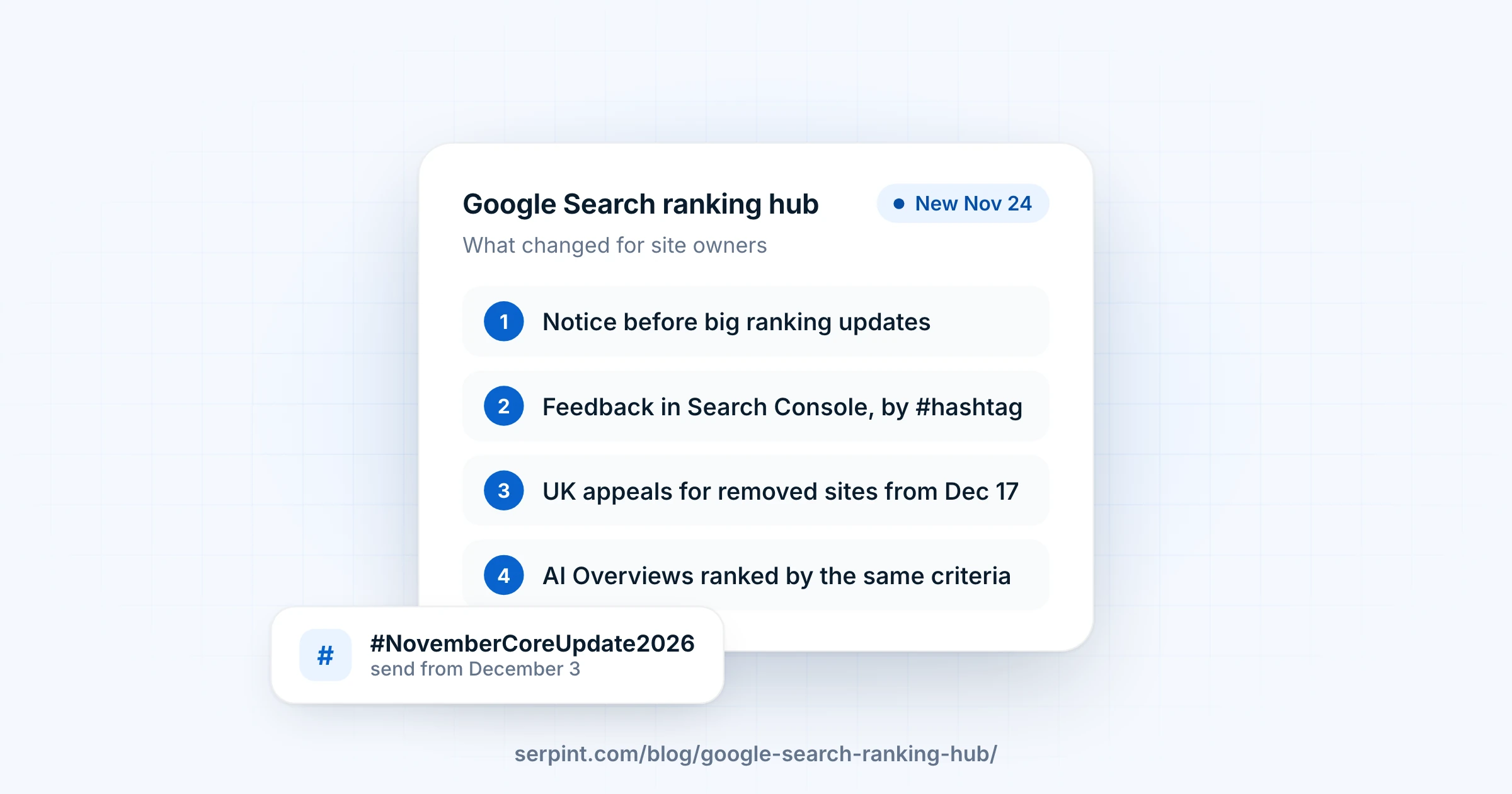
Google launched a Search ranking hub on November 24, 2026. Google ranking updates now get advance notice, a feedback route in Search Console tagged by update, and UK appeals from December 17. I think the feedback route is worth five minutes, if you file it with evidence.
✅ My advice Send feedback on the November 2026 core update only if a section of your site lost clicks, and only from December 3. Tag it #NovemberCoreUpdate2026, and include the two weeks, the queries you lost and the sites that rank instead.
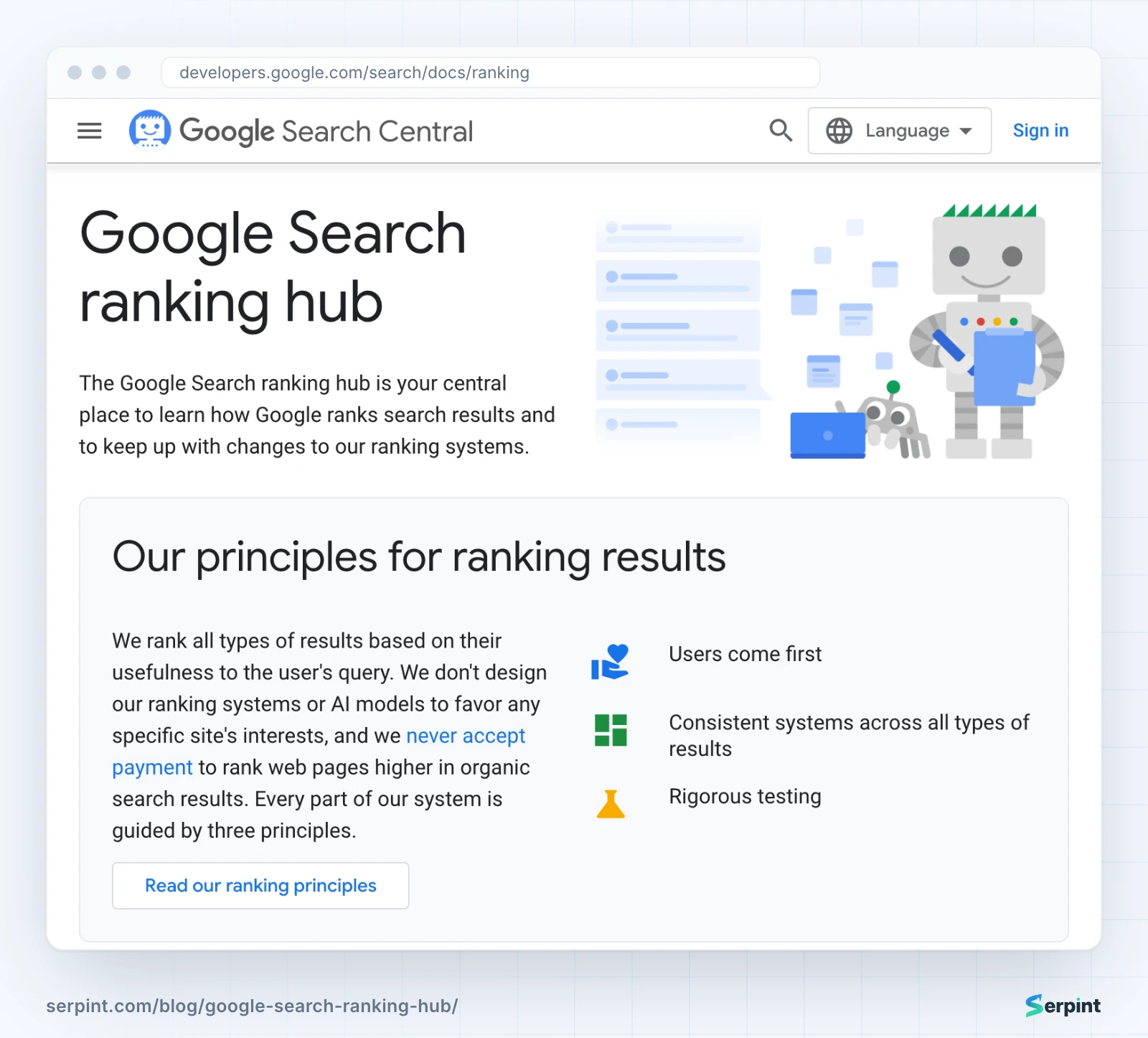
Most of the hub links pages Google already had. What’s new sits in three pages, plus one rewrite.
What did Google launch with the Search ranking hub?
The Search ranking hub is a new Search Central section with three new pages: ranking principles, notice, and feedback. Google also added two generative AI pages and rewrote its Google-Extended page, per its changelog.
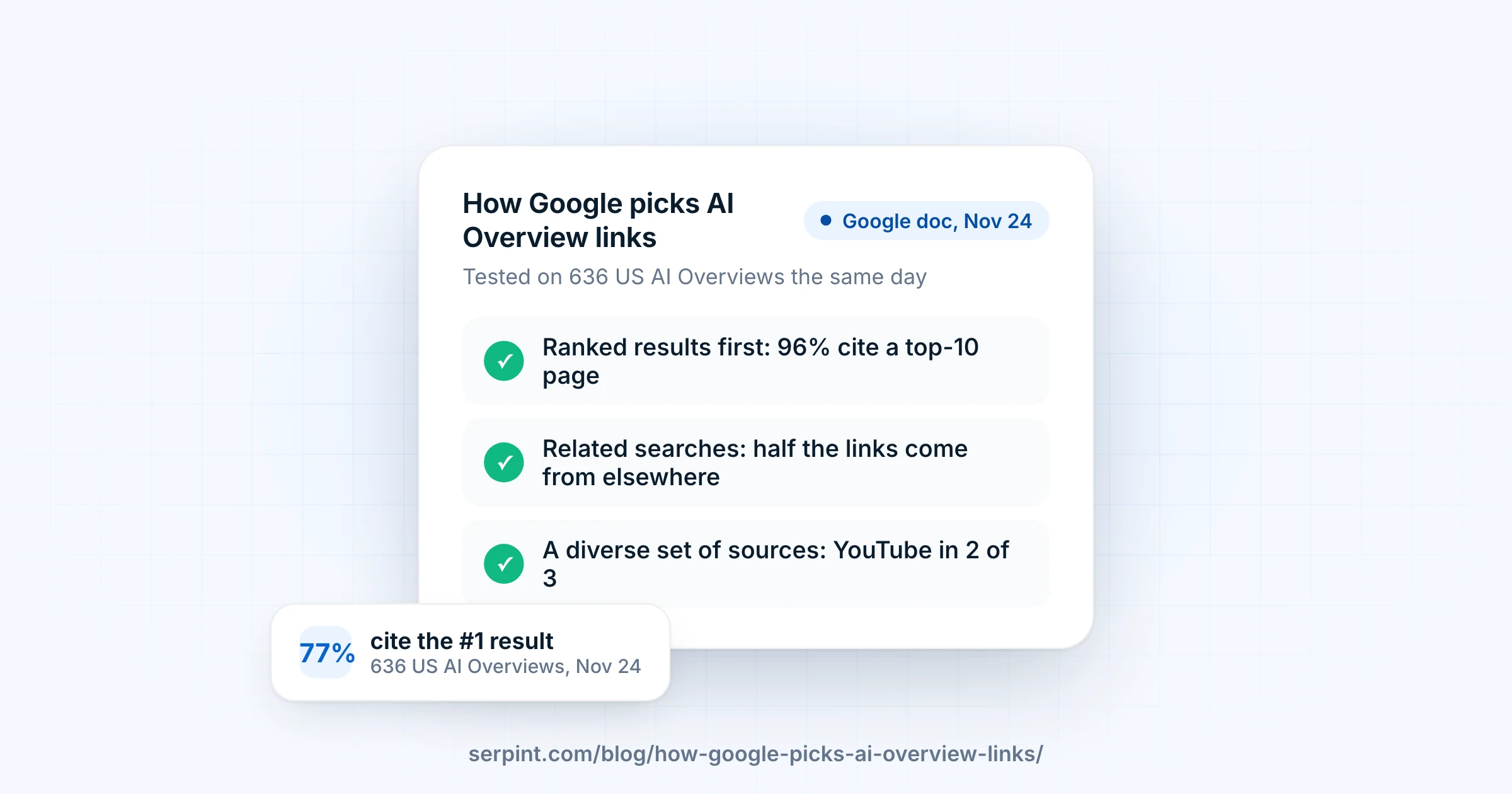
The principles page says AI Overviews, carousels, images and web listings “are evaluated using the same criteria.” Google says it makes no manual ranking changes, except for legal obligations and its content policies. How AI Overviews pick their links is in a separate page, which we cover on its own.
The notice is the part that changes your calendar, so start there.
How much notice did 2026’s updates get?
Every Google update of 2026 got zero days’ notice. In Google’s own incident list, each one was posted between 1 and 18 minutes after it began. The December 2026 core update, announced on November 24 for “December 2026”, is the first announced ahead.
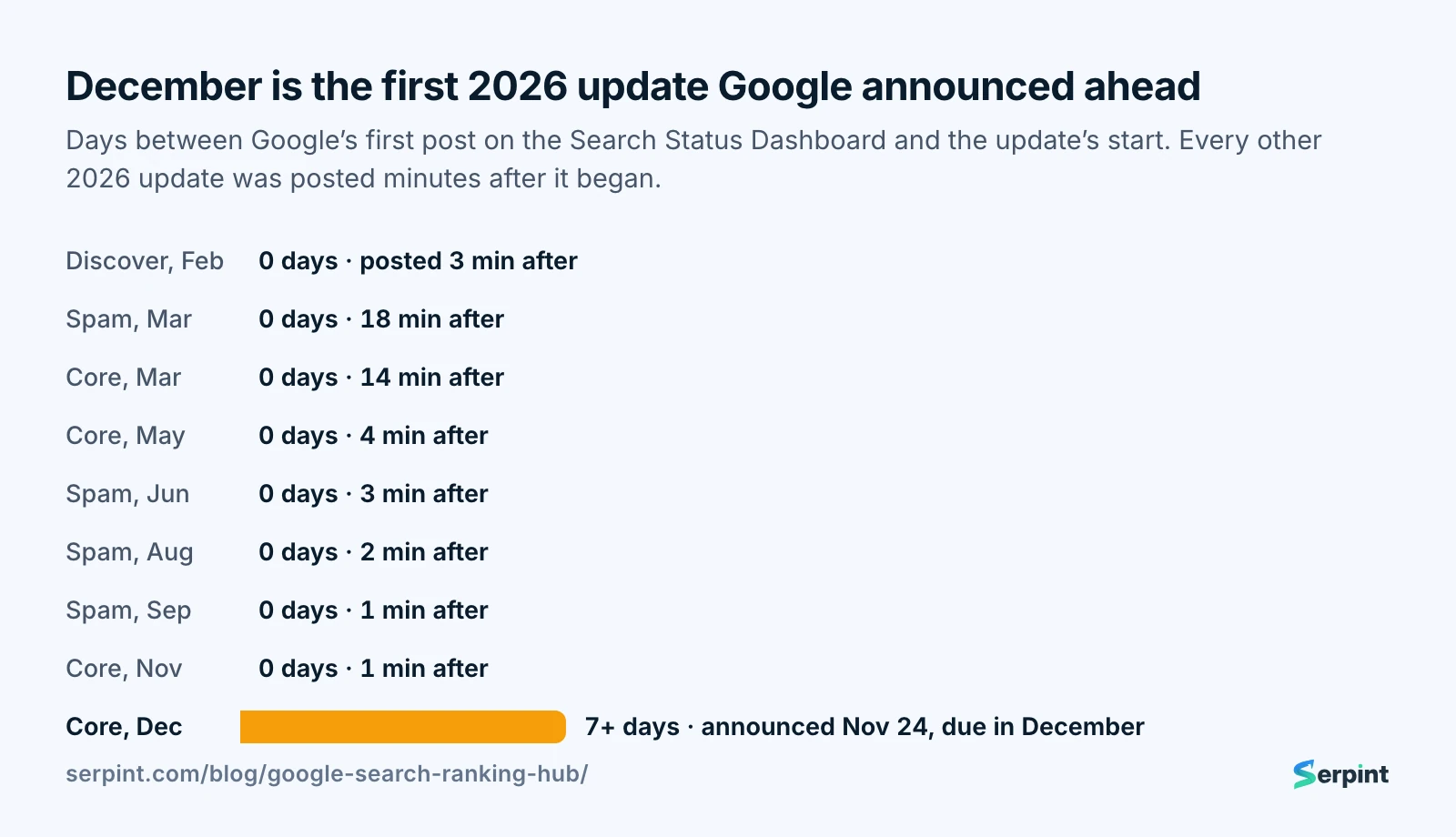
Data: Google’s Search Status Dashboard, incidents.json, 2026.
Google’s stay-informed page promises notice of policy changes and core updates on the dashboard and its RSS feed, without saying how many days. Google told Search Engine Roundtable December’s update is “not imminent”.
The reason for the change sits in the UK.
What do the UK rules make Google do?
The UK’s competition regulator, the CMA, imposed a fair ranking requirement on Google that binds from December 17, 2026. It sets notice of 30 business days for changes publishers can act on, and 15 for big ranking shifts Google can explain.
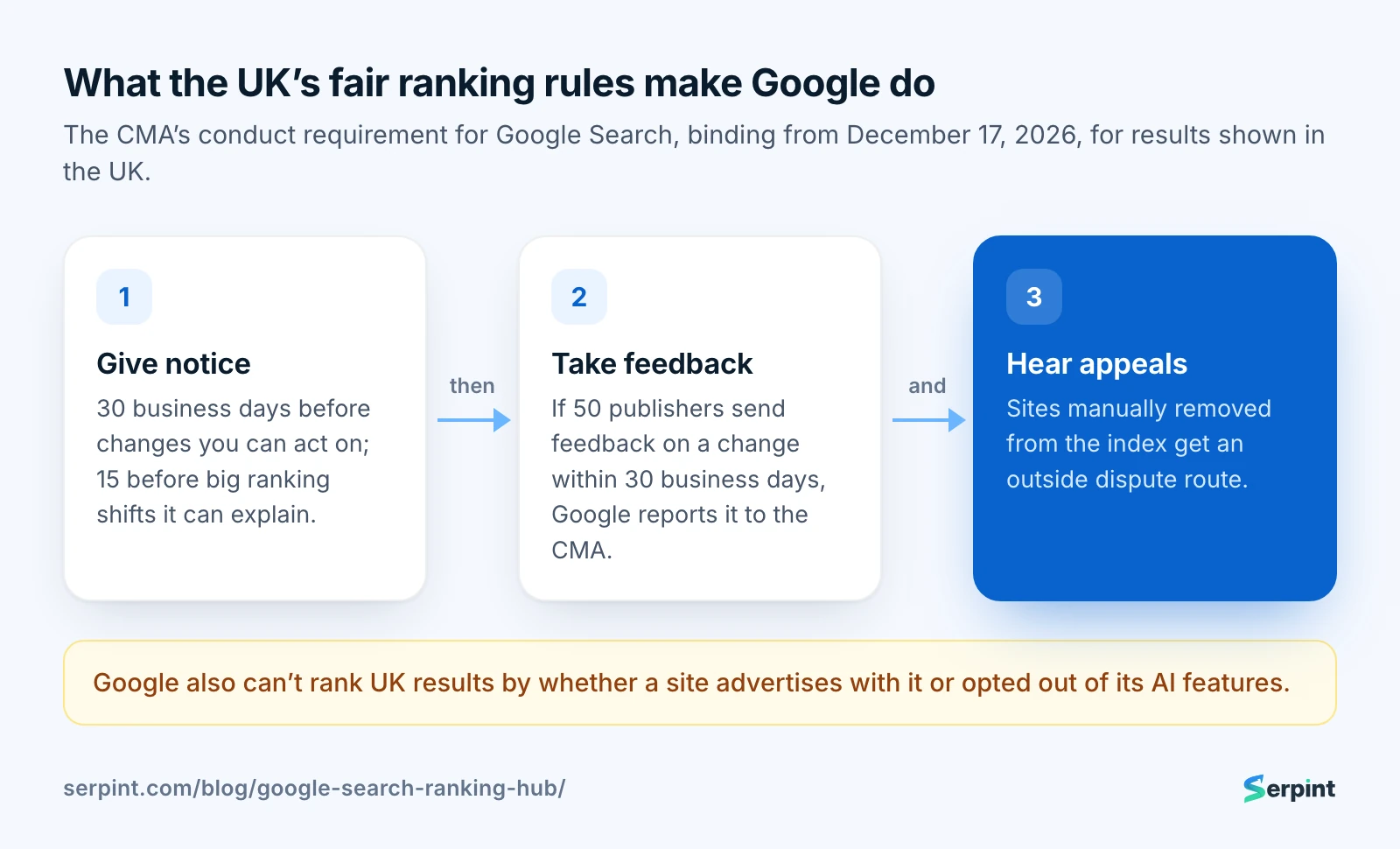
Data: the CMA’s conduct requirement notice and summary.
The CMA’s notice holds the detail most coverage skipped: if 50 publishers send feedback on one change within 30 business days, Google must pass it to the CMA. From December 17, UK-serving sites manually removed from the index can also appeal.
What changes for sites outside the UK?
Sites outside the UK get the notice too, because core updates apply to every country at once. The 50-publisher count is different: it only counts harm to a UK market, and only for changes after December 17. If you sell into the UK, from then on your feedback also counts toward it.
Notice tells you when to measure. Feedback is how you answer.
How do you send feedback on the November 2026 core update?
Send feedback once Search Console has the first full week after the update: Google says to wait for “at least a week of post-rollout data”. For November, that’s November 25 to December 1, in Search Console from about December 3.
Step 1: find what fell. In Performance, compare November 25 to December 1 with November 3 to 9, as in our core update post. Filter to the fallen section, sort Queries by Clicks Difference, and screenshot it.
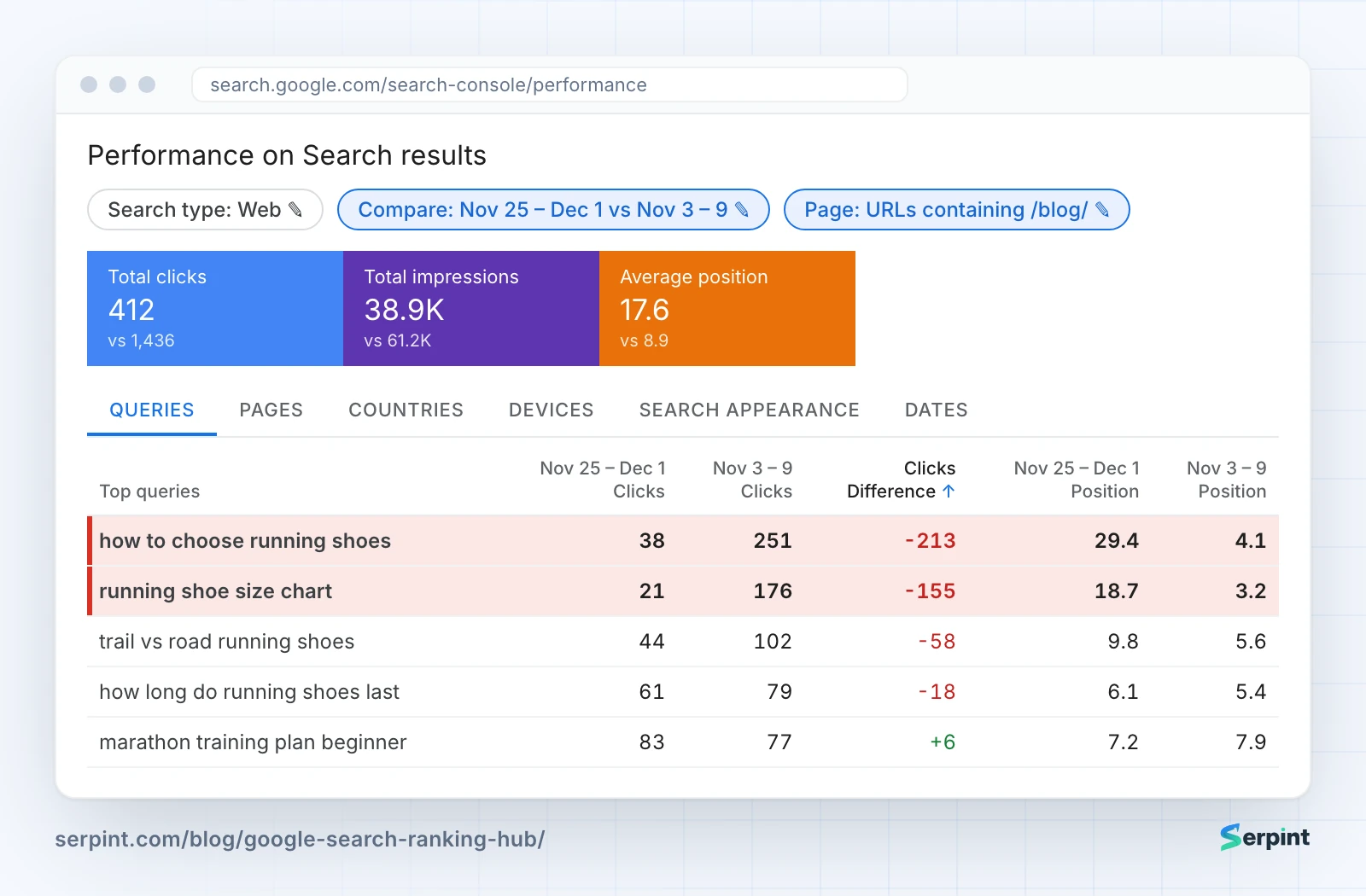
Step 1: the section and the queries that fell. Redrawn with sample data.
Step 2: look at who ranks now. Search each lost query and note the pages above you. Google’s best example of a page that ranks “inappropriately” is scraped content outranking the original.
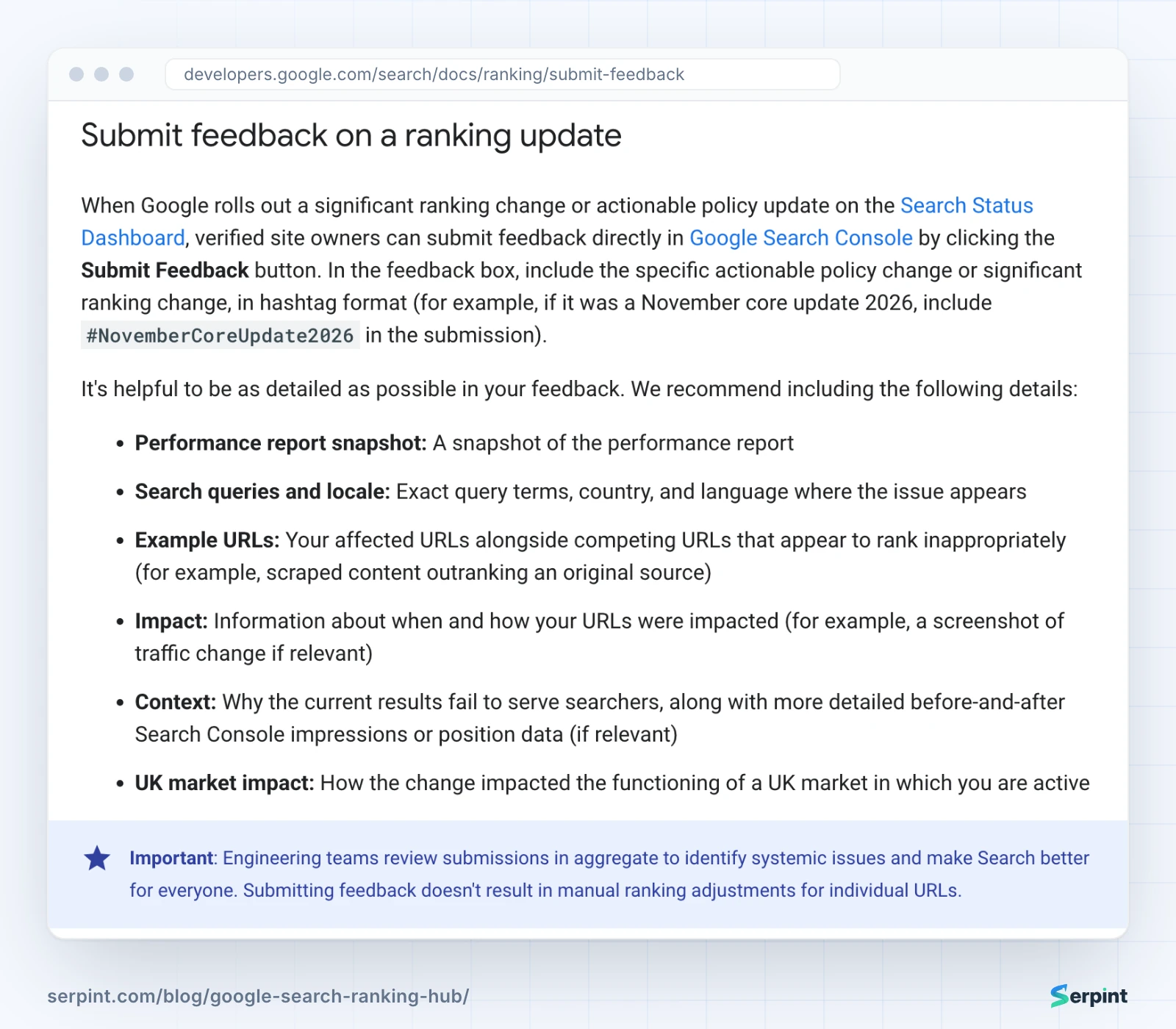
Step 3: write it as a case. Open Submit feedback in Search Console, start with #NovemberCoreUpdate2026, and fill in Google’s list. Say why the new results serve searchers worse, not just that you lost.
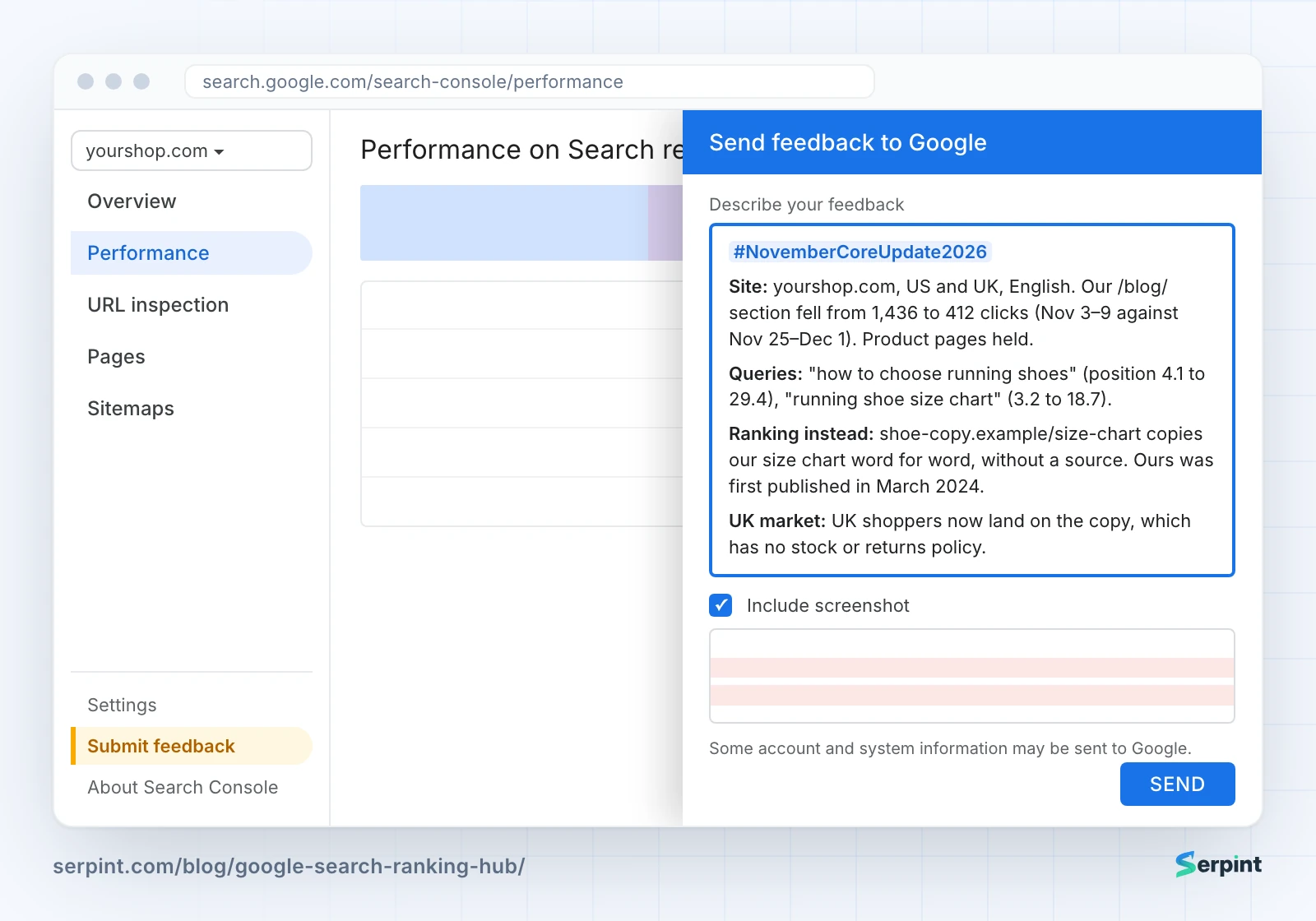
Step 3: a sample submission. Redrawn with sample data.
Then expect nothing back: engineers review submissions “in aggregate” and change nothing for individual URLs.
💡 My take Feedback won’t win your rankings back. Its value is the record: one site’s complaint is noise, but the same evidence from fifty sites is a signal, and from December 17 one Google must report in the UK.
That record matters most if you can time it, which is where notice helps.
Does advance notice change how you prepare?
Advance notice tells you when, not what to fix. December’s names “longer and more complex questions” and personalized results, nothing you can edit for. Its real use is timing: keep your own migrations and redesigns out of the rollout, so you can tell its effect from yours.
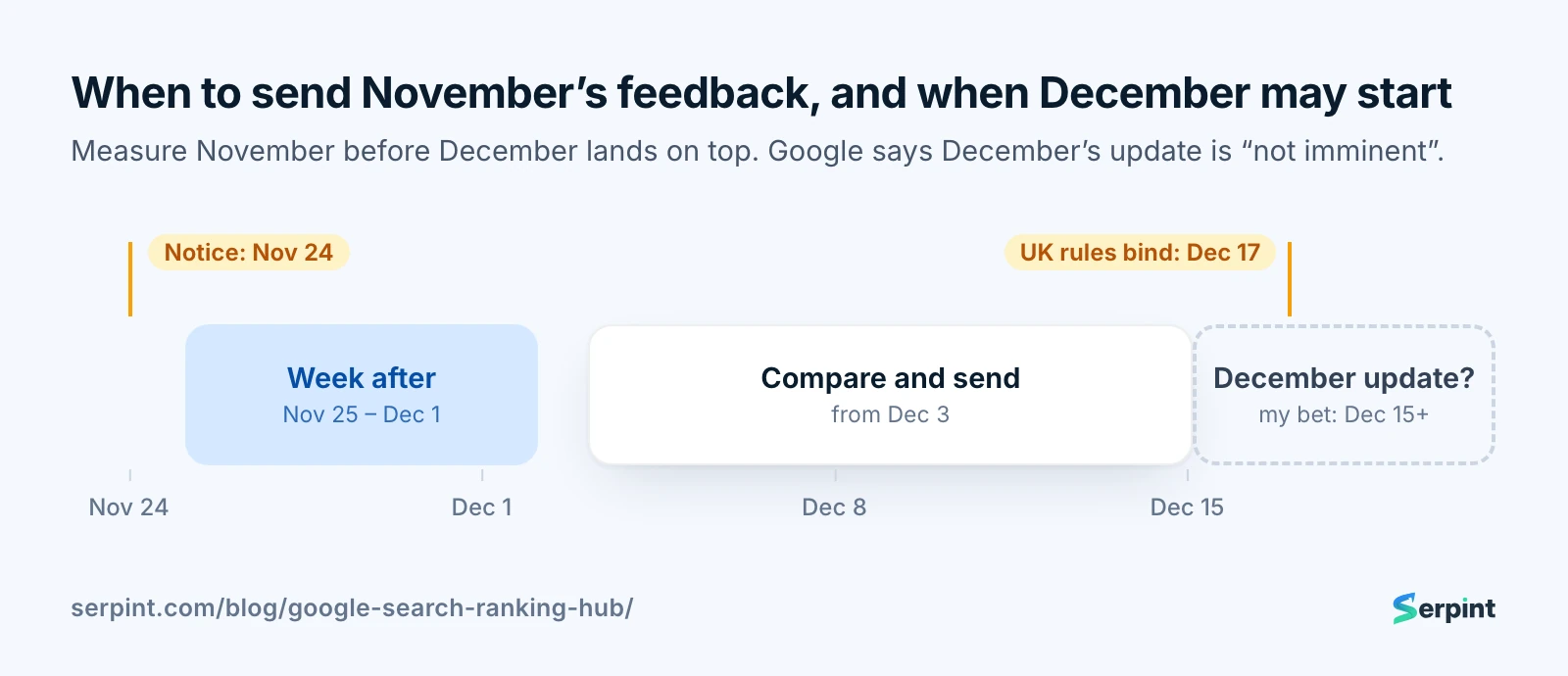
Some SEOs read the bundle as a sign Google is “planning something big”. I read the same-day bundle as compliance before December 17. December’s personalization focus is the real unknown.
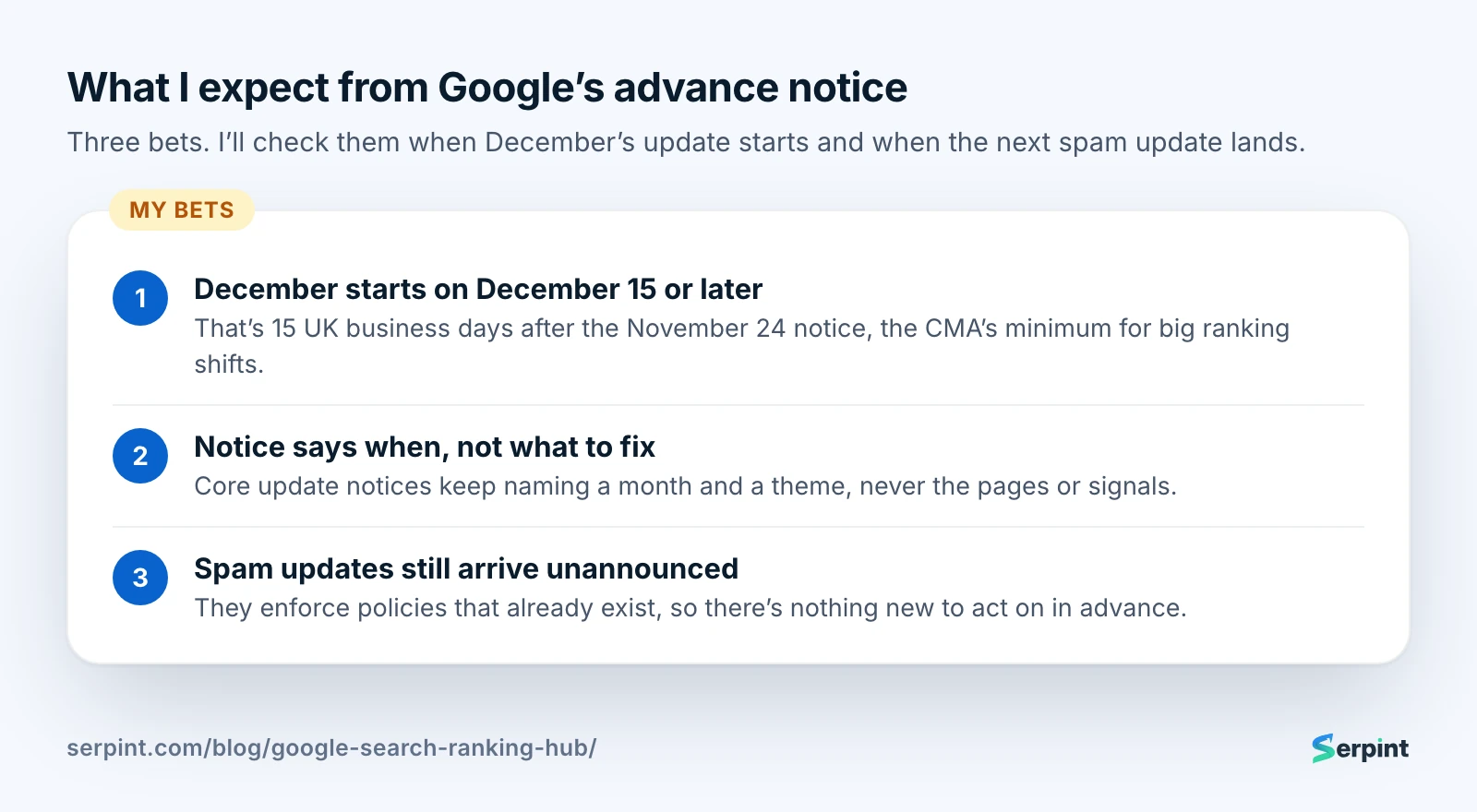
- December starts on December 15 or later. That’s 15 UK business days after the November 24 notice, the CMA’s minimum for big ranking shifts, and Google called it “not imminent”.
- Notices say when, not what to fix. December’s names a month and two themes, nothing more.
- Spam updates still arrive unannounced. They enforce policies that already exist, so there’s nothing new to act on ahead.
One more page changed that day, and it’s about AI rather than rankings.
What changed for Google-Extended?
Google-Extended works as before, but its page now says plainly what it covers: training and grounding for Google’s AI products outside Search, like the Gemini app. Blocking it doesn’t affect inclusion or ranking in Search.
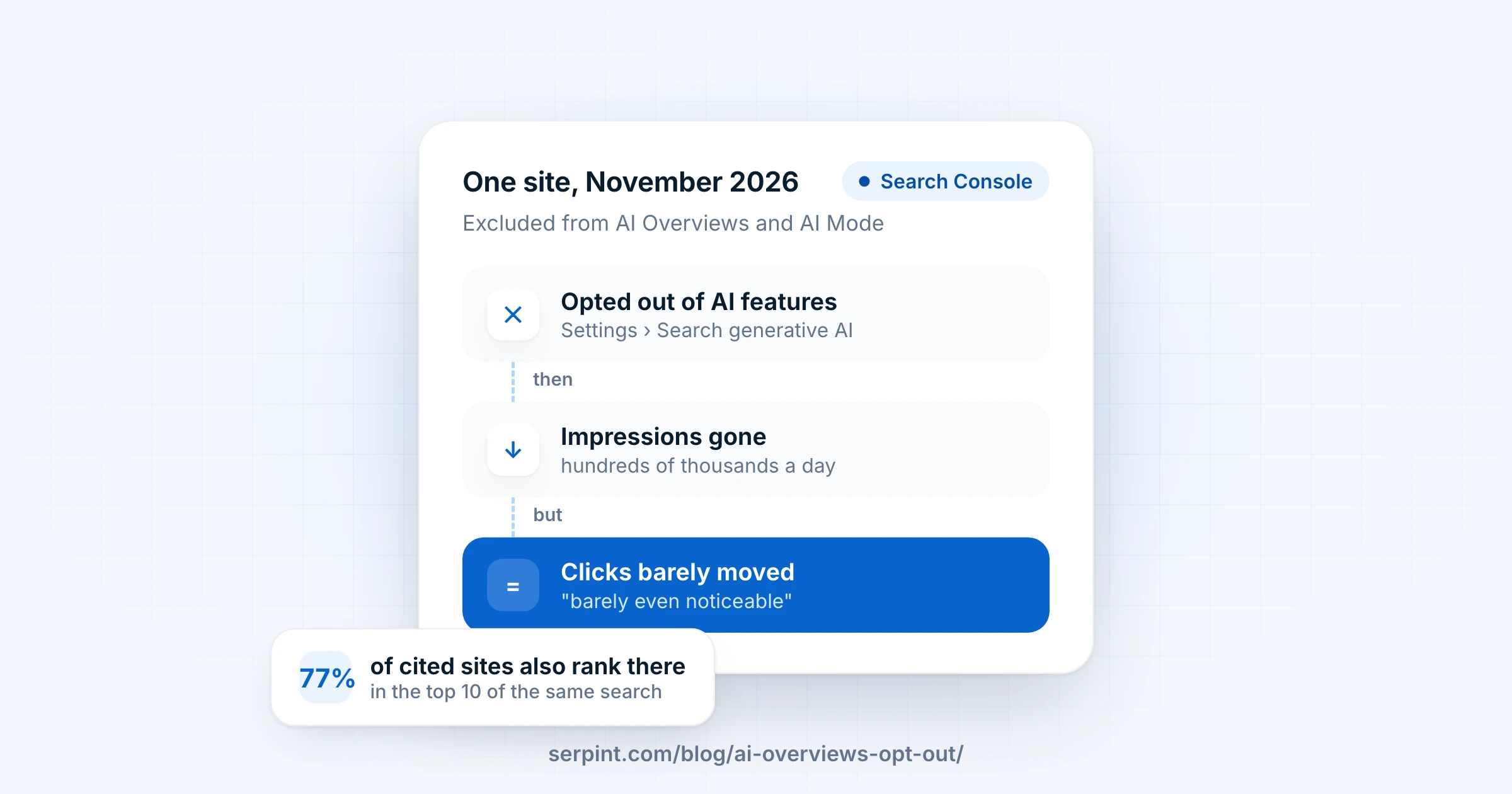
AI Overviews and AI Mode have their own switch, the Search generative AI control in Search Console, as Google’s controls page explains.
Whatever you block, the week after an update is still the number that matters.
How can Serpint build your feedback for you?
Serpint shows Google’s announced updates within minutes of Google posting them, and measures each finished one against your site’s own trend. Right now its banner says December is announced but hasn’t moved anything yet.
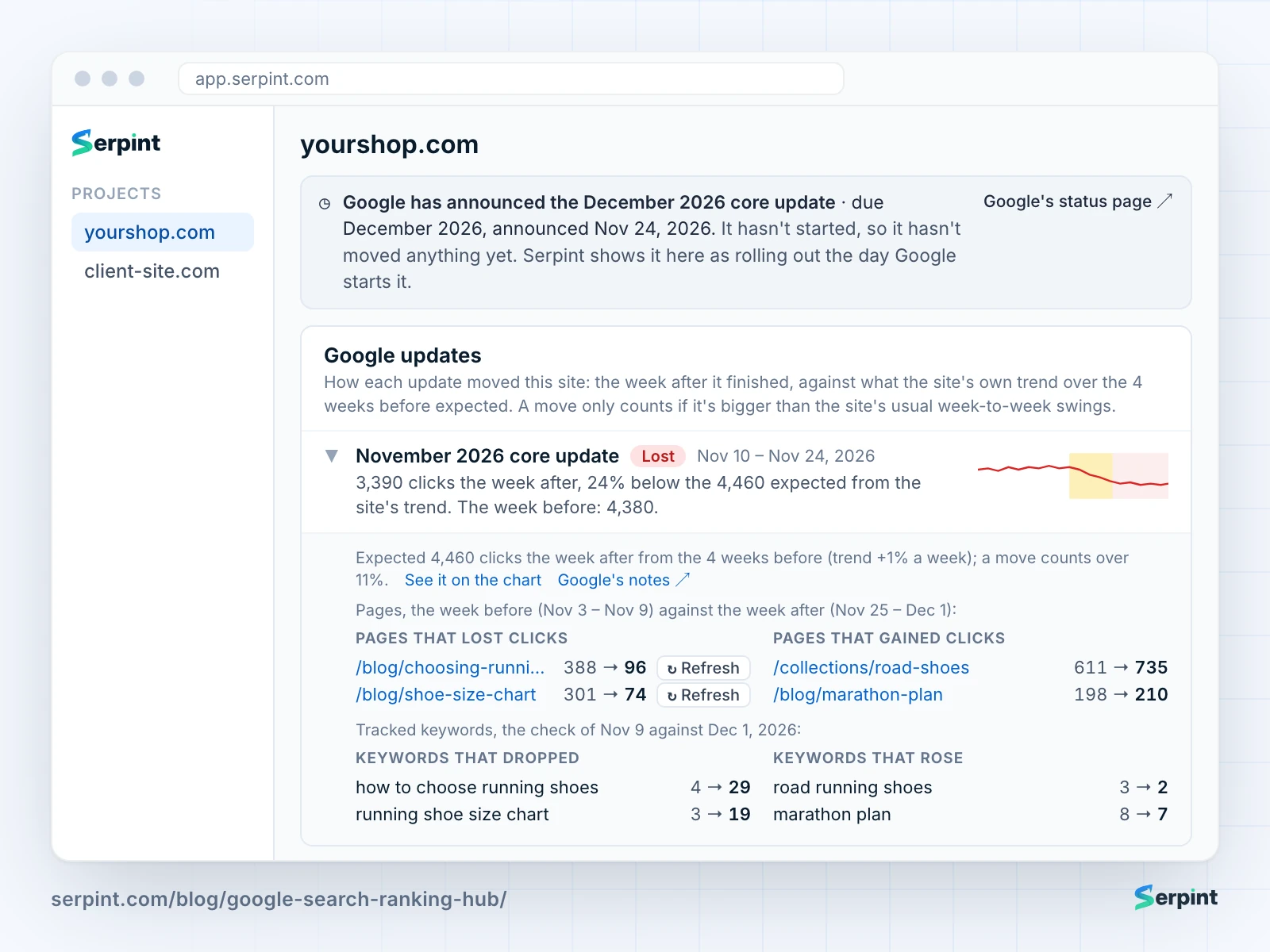
The card lists the pages that lost clicks and the tracked keywords that dropped: the affected URLs and queries Google asks for, with numbers. Each losing page has a Refresh button to rework it.
Some of this is still open.
What don’t we know yet?
We don’t know how many days Google’s notice will give, whether the CMA will publish the 50-publisher reports, or when December starts. I’ll check the bets when it does.
What should you do now?
What you should do now is measure November before December lands, then decide on feedback, in four steps.
- Subscribe to the Search Status Dashboard’s feed.
- From December 3, compare the week after November’s update with November 3 to 9.
- If a section fell, send #NovemberCoreUpdate2026 feedback with the queries, pages and sites now ranking.
- Keep big site changes out of mid-December, and if your UK-serving site was manually removed, appeal from December 17.
Founder of Serpint
Founder of Serpint. 6+ years in SEO and content marketing and 2 in GTM engineering, most recently as Head of Product and Content at lobstr.io, a B2B SaaS web scraping platform, until October 2026. Writes about SEO, AEO and GEO, the full stack of search and AI answer optimization, and content marketing.